Introduction
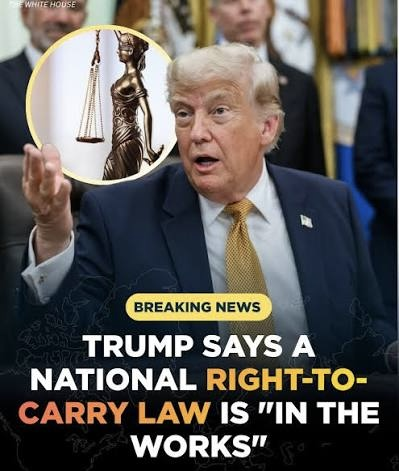
In January 2025, Representative Thomas Massie (R-KY) introduced H.R. 645, the National Constitutional Carry Act, in the 119th Congress. This landmark legislation seeks to enforce the full protections of the Second and Fourteenth Amendments by prohibiting states and localities from restricting the public carry of firearms by law-abiding U.S. citizens who are eligible to possess them under federal and state law.
As of mid-2026, the bill remains in the House Judiciary Committee, but it has garnered significant attention from Second Amendment advocates. With nearly three dozen Republican cosponsors, including Reps. Lauren Boebert, Marjorie Taylor Greene, and others, H.R. 645 represents a bold effort to nationalize constitutional carry and eliminate patchwork permitting regimes that infringe on the right to bear arms.
This article examines the bill’s background, key provisions, legal foundations, potential impacts, and broader significance for American liberty.
Historical and Legal Context
The Second Amendment states: “A well regulated Militia, being necessary to the security of a free State, the right of the people to keep and bear Arms, shall not be infringed.” For much of the nation’s history, carrying firearms in public for self-defense was a common and largely unrestricted practice. The modern era of restrictive gun control emerged primarily in the 20th century, often in response to social and political pressures rather than rooted in the Constitution’s original meaning.
Key Supreme Court decisions have reaffirmed this right. In District of Columbia v. Heller (2008), the Court held that the Second Amendment protects an individual right to keep and bear arms for self-defense. McDonald v. City of Chicago (2010) extended these protections to the states via the Fourteenth Amendment. Most importantly, New York State Rifle & Pistol Association v. Bruen (2022) struck down subjective “may-issue” permitting schemes, emphasizing that the right to carry arms in public is protected and that regulations must align with the nation’s historical tradition.
Despite these rulings, many states continue to impose permit requirements, training mandates, fees, and other barriers that effectively burden or criminalize the exercise of this right. As of 2025, while 29 states had adopted some form of constitutional carry (permitless carry for eligible adults), restrictive jurisdictions like California, New York, and Illinois maintained stringent controls, creating a confusing and rights-infringing patchwork for travelers and residents alike.
H.R. 645 directly addresses this inconsistency by affirming that the Second Amendment’s protections are not contingent on state approval.
Key Provisions of H.R. 645
The bill is concise but sweeping. Section 1 provides the short title. Section 2 contains congressional findings that cite Heller, McDonald, and Bruen, underscoring that public carry is a pre-existing right essential to “the security of a free State.”
Section 3 amends 18 U.S.C. § 927 to read:
• (a) No State or political subdivision may impose criminal or civil penalties, or otherwise indirectly limit (including through financial or other barriers), the carrying of firearms in public by eligible U.S. citizens.
• (b) Any conflicting state or local laws, ordinances, regulations, customs, or usages “shall have no force or effect.”
• (c) “State” includes the District of Columbia, Puerto Rico, and U.S. possessions.
• (d) “Public” includes places open to the public (with exceptions for clearly posted private prohibitions and locations with firearm screening under state law).
The legislation explicitly covers both residents and nonresidents, ensuring nationwide reciprocity in practice without the need for permits. It does not create new federal restrictions or override federal prohibitions (such as those on felons or certain sensitive places already consistent with historical tradition). Private property owners retain the right to prohibit firearms on their premises if they communicate it clearly.
Arguments in Favor: Constitutional Fidelity and Public Safety
Proponents, including Rep. Massie, argue that H.R. 645 simply enforces the Constitution as written. “I’m fortunate to live in a state where people are free to exercise their right to keep and bear arms without begging the government or paying a fee,” Massie stated. The bill eliminates the need for law-abiding citizens to seek government permission to exercise a fundamental right.
Data from states that have adopted constitutional carry supports this approach. Studies and crime statistics from permitless carry states often show stable or declining violent crime rates, contradicting predictions of “Wild West” chaos. Organizations like the National Association for Gun Rights (NAGR) and American Firearms Association (AFA) have endorsed the bill, noting that armed citizens deter crime and that restrictive laws disproportionately affect the law-abiding while failing to disarm criminals.
For travelers, the bill would end the nightmare of navigating varying state laws during cross-country trips. Seniors, families, and those in high-crime areas would gain consistent self-defense options. In an era of rising urban crime in some jurisdictions, this legislation prioritizes the rights of potential victims over the preferences of gun-control advocates.
Potential Challenges and Criticisms
Opponents, primarily from anti-Second Amendment groups, claim the bill undermines state authority and could increase risks. They argue that permitting processes allow for background checks and training, though these are already addressed by federal NICS checks for purchases and the fact that many constitutional carry states maintain optional permits for reciprocity.
Legally, the bill relies on Congress’s power to enforce the Fourteenth Amendment and regulate interstate commerce implications of carry rights. Critics may challenge its scope, but post-Bruen jurisprudence strengthens its foundation. Implementation could face resistance from recalcitrant states, potentially leading to further litigation.
Practically, concerns about sensitive places or private property are addressed in the text. The bill does not prevent states from regulating carry in truly sensitive government facilities consistent with history and tradition.
Broader Implications for the Second Amendment Movement
If enacted, H.R. 645 would represent one of the most significant advancements in Second Amendment jurisprudence since Bruen. It would shift the default from government permission to constitutional presumption, aligning federal law with the original public meaning of the right to bear arms.
For advocates in states like Indiana, it would provide a national backstop against future restrictive legislation. It reinforces the principle that rights are not granted by government but protected from infringement. In the context of ongoing debates over ATF regulations, magazine bans, and other measures, this bill reaffirms that self-defense is a core civil right.
The legislation also highlights the importance of judicial appointments and congressional action in defending liberties. With strong support from grassroots groups, it could serve as a rallying point for further reforms, such as national reciprocity enhancements or challenges to remaining unconstitutional restrictions.
Conclusion: A Step Toward Constitutional Restoration
H.R. 645, the National Constitutional Carry Act, is more than a policy proposal—it is a declaration that the Second Amendment means what it says. By nullifying inconsistent state barriers to public carry, it seeks to create a uniform national standard rooted in the Constitution rather than bureaucratic discretion.
As the bill progresses, supporters are encouraged to contact their representatives, particularly members of the House Judiciary Committee. For Second Amendment advocates, passage would mark a victory for liberty, self-reliance, and the foundational principles that secure a free state.
In an uncertain world, the ability of law-abiding citizens to defend themselves and their families should not depend on geography or government approval. H.R. 645 moves America closer to realizing the full promise of the Second Amendment for all.