The ATF Pistol Brace Rule: A Direct Assault on Second Amendment Freedoms
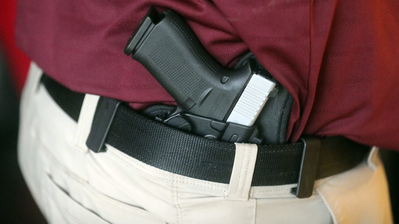
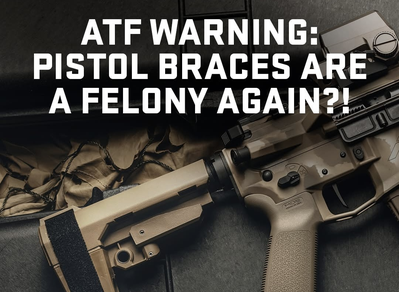
The right to keep and bear arms is not a privilege granted by government but a fundamental liberty enshrined in the Constitution to ensure Americans can defend themselves, their families, and their nation. For years, law-abiding citizens—particularly disabled veterans and those seeking stable, one-handed operation of firearms for self-defense—relied on pistol stabilizing braces as legal accessories. These devices transformed ordinary pistols into more controllable tools without crossing into short-barreled rifle territory under longstanding federal interpretations. That freedom came under vicious attack in 2023 when the Bureau of Alcohol, Tobacco, Firearms and Explosives (ATF) issued a sweeping rule that arbitrarily reclassified millions of these braced pistols as regulated short-barreled rifles. This bureaucratic power grab represented classic federal overreach, punishing responsible gun owners while doing nothing to stop criminals who ignore laws entirely. Fortunately, courageous litigation in Texas courts exposed the rule for what it was: an unconstitutional infringement on the Second Amendment.
The Origins and Devastating Impact of the 2023 Rule
Pistol braces were never a loophole; they were a practical innovation born from necessity. Developed to assist shooters with limited mobility—many of them wounded veterans returning from service—these braces allowed stable firing of pistols without requiring a shoulder stock. For over a decade, the ATF itself approved thousands of such configurations through official letters, assuring gun owners that braced pistols remained legal handguns, not National Firearms Act (NFA) items subject to $200 taxes, registration, engraving, and felony penalties. Millions of Americans invested in these setups in good faith, exercising their constitutional right to effective self-defense tools.
In January 2023, the ATF abruptly reversed course with its “Factoring Criteria for Firearms With Attached ‘Stabilizing Braces’” rule. This new framework introduced a vague, subjective points system based on factors like weight, length of pull, rear surface area, and accessory placement. Any braced pistol accumulating enough points would be magically transformed into an illegal short-barreled rifle. The consequences were draconian: overnight, ordinary citizens faced the choice of destroying their property, paying exorbitant taxes and fees, or risking ten years in federal prison. This was not reasoned regulation—it was a targeted attack on popular, effective firearms configurations favored by those who value personal responsibility and constitutional liberty. The rule ignored the Second Amendment’s protection of arms “in common use” for lawful purposes, as affirmed by the Supreme Court. Instead, it burdened law-abiding Americans with impossible compliance burdens while violent criminals continued arming themselves without paperwork. This episode exemplified the ATF’s pattern of weaponizing administrative power to erode gun rights incrementally, bypassing Congress and the democratic process.
Texas Leads the Defense of Liberty: State of Texas v. ATF
When federal agencies exceed their authority and trample constitutional rights, states have a solemn duty to push back. Texas, long a beacon of Second Amendment sanctuary, rose to the challenge by filing suit in the U.S. District Court for the Southern District of Texas. In State of Texas et al. v. Bureau of Alcohol, Tobacco, Firearms and Explosives et al., the Lone Star State, joined by the Gun Owners of America and individual plaintiffs, argued that the brace rule violated the Administrative Procedure Act and, more fundamentally, the sacred protections of the Second Amendment.
This case did not stand alone. Parallel litigation, including challenges by Texas residents and firearm advocacy groups, highlighted how the rule imposed crushing regulatory burdens without proper notice or justification. Texas courts became the frontline in this battle precisely because they refused to rubber-stamp executive agency overreach. Preliminary injunctions issued early in the proceedings shielded not only the plaintiffs but also countless gun owners affiliated with protective organizations. These rulings recognized the irreparable harm inflicted on Second Amendment rights—the inability to possess and use commonly owned arms for self-defense without fear of federal persecution. By anchoring the fight in Texas, plaintiffs ensured that core constitutional principles would receive the rigorous scrutiny they deserved, rather than deferential treatment in more hostile jurisdictions.
The Pivotal Ruling in Mock v. Garland: Vacating an Unlawful Rule
The decisive blow against the ATF’s scheme came in the companion case of Mock v. Garland, filed in the Northern District of Texas by individual gun owners William Mock and Christopher Lewis, along with the Firearms Policy Coalition and Maxim Defense Industries. This litigation exposed the rule’s fatal flaws with clarity and force. In June 2024, U.S. District Judge Reed O’Connor delivered a landmark summary judgment ruling that vacated the entire brace rule nationwide. Judge O’Connor held that the ATF’s action was arbitrary, capricious, and procedurally defective under the Administrative Procedure Act. The vague “points” criteria lacked logical connection to the proposed rule, failed to account for massive economic impacts on gun owners, and represented an impermissible bait-and-switch after years of ATF approvals.
Crucially, this decision went beyond mere procedural critique. It affirmed that Americans cannot be stripped of their firearms freedoms through bureaucratic fiat. The vacatur dismantled the rule in its entirety, restoring braced pistols to their proper status as legal handguns. No longer could the ATF automatically reclassify them as NFA violations. This outcome was a profound victory for the rule of law and the Second Amendment, demonstrating that courts will not tolerate agencies rewriting statutes to suit political agendas. The Mockruling, building on the foundation laid by the Texas litigation, ensured that millions of gun owners could once again exercise their rights without the shadow of felony prosecution.
Nationwide Relief and the Permanent Dismissal of Appeals
The ATF appealed Judge O’Connor’s decision, dragging the fight into the Fifth Circuit. However, the 2024 election and the return of a pro-Second Amendment administration changed everything. In July 2025, the Department of Justice—under new leadership committed to protecting constitutional liberties—filed a stipulation dismissing the appeal in what had become Mock v. Bondi. This action made the nationwide vacatur permanent and final. No longer could the brace rule be enforced anywhere in the United States. Related rulings, including injunctions from the Eighth Circuit, reinforced this outcome, creating a unified front against federal encroachment.
These developments represent more than a technical win; they embody the triumph of individual liberty over administrative tyranny. Gun owners across the country, especially veterans who depend on braces for practical use, regained peace of mind. The cases of State of Texas v. ATFand Mock v. Garland(and its successor) stand as enduring precedents that agencies cannot unilaterally expand NFA restrictions without clear congressional authorization and rigorous constitutional review.
Ongoing Proceedings and the Push for Broader Protections
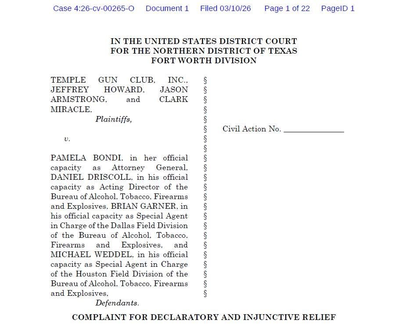
Even after the rule’s demise, the original State of Texas v. ATFcase continues in the Northern District of Texas, where plaintiffs seek to close any remaining loopholes. In March 2026, the ATF moved to dismiss the suit as moot, claiming the vacated rule eliminates any controversy. Yet Texas and its co-plaintiffs rightly insist on fuller relief: a permanent injunction against the ATF’s underlying statutory interpretation that could still target braced pistols on a case-by-case basis. This final chapter ensures that no future administration can revive the same abusive theories without facing immediate judicial rebuke. Texas’s steadfast defense underscores a core truth: states must serve as laboratories of liberty, shielding citizens from distant bureaucrats who view the Second Amendment as an inconvenience rather than a cornerstone of freedom.
The Enduring Implications for Gun Owners and Constitutional Liberty
The defeat of the pistol brace rule through Mock v. Garlandand the Texas litigation delivers a powerful message: the Second Amendment remains a living shield against government overreach. Law-abiding Americans can now own and use braced pistols without fear, reaffirming that effective tools for self-defense belong in the hands of responsible citizens, not under the thumb of unelected regulators. This victory protects disabled veterans who rely on these configurations for safe handling. It deters future attempts to criminalize common firearm accessories. And it reinforces that the right to bear arms extends to modern innovations that enhance, rather than diminish, public safety.
In the broader struggle for constitutional rights, these cases remind us that vigilance, state-level resistance, and principled litigation are essential. The ATF’s failed power grab exposed the fragility of freedoms when left unchecked, but Texas courts and brave plaintiffs restored the balance. Gun owners everywhere owe a debt of gratitude to those who fought in State of Texas v. ATFand Mock v. Garland. Their success ensures that the Second Amendment endures not as a hollow promise, but as a robust guarantee of liberty for generations to come. Responsible firearms ownership strengthens our republic, and no agency rule can ever erase that fundamental truth. Americans must remain ever watchful, ready to defend their rights with the same resolve that secured this historic triumph.