Introduction
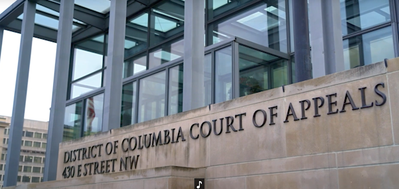
In a pivotal decision that reshapes gun rights in the nation’s capital, the District of Columbia Court of Appeals ruled on March 5, 2026, in Benson v. United States that Washington, D.C.’s prohibition on firearm magazines holding more than 10 rounds of ammunition violates the Second Amendment. This case, arising from a criminal conviction, highlights ongoing tensions between public safety measures and constitutional protections for firearm ownership. The ruling underscores the evolving interpretation of the Second Amendment following key U.S. Supreme Court precedents, potentially influencing similar restrictions nationwide.
Background of the Case
The case centers on Tyree Benson, who was arrested and convicted in D.C. Superior Court for possessing a handgun equipped with a 30-round magazine. Additional charges included carrying a pistol without a license and unlawful possession of ammunition. Benson appealed his conviction, arguing that the District’s magazine limit, enacted under D.C. Code § 7-2506.01(b), infringed on his Second Amendment rights.
This ban, part of broader gun control efforts in D.C., aimed to reduce the lethality of mass shootings by limiting the number of rounds a firearm could discharge without reloading. Proponents viewed it as a reasonable restriction, while critics contended it unduly burdened self-defense capabilities. The U.S. government, representing federal interests, conceded the ban’s unconstitutionality, leaving the District to defend it vigorously.
The appeal drew on a series of Supreme Court decisions that have expanded Second Amendment protections. Notably, District of Columbia v. Heller (2008) affirmed an individual’s right to possess handguns for self-defense. New York State Rifle & Pistol Association v. Bruen (2022) established a historical-analogical test for gun regulations, requiring them to align with the nation’s historical tradition of firearm regulation. United States v. Rahimi (2024) further refined this framework, emphasizing consistency with Founding-era principles.
The Court’s Decision
In a majority opinion authored by Associate Judge Deahl, the court declared the magazine ban facially unconstitutional, meaning it fails in all applications. The judges determined that magazines capable of holding more than 10 rounds—often termed large-capacity magazines (LCMs)—are protected “arms” under the Second Amendment. These components are essential for the effective operation of semi-automatic firearms, which are commonly used for lawful purposes like self-defense.
The court reversed Benson’s convictions on all counts, reasoning that the invalid magazine restriction invalidated related firearm registration and licensing requirements. This outcome not only exonerates Benson but also invalidates the ban for all D.C. residents, pending any further appeals.
Majority Opinion
The majority applied the Bruen test rigorously. First, it confirmed that LCMs are in “common use” for lawful activities. Evidence showed hundreds of millions of such magazines in circulation across the U.S., with many standard-issue for popular firearms. Their utility extends beyond self-defense to hunting and recreational shooting.
Crucially, the court found no analogous historical tradition supporting such a ban. The District attempted to draw parallels to early regulations on trap guns, gunpowder storage, or Bowie knives, but these were dismissed as insufficiently similar. Trap guns, for instance, were concealed hazards, unlike openly carried magazines. Gunpowder limits addressed explosive risks, not ammunition capacity. Bowie knife bans targeted specific weapons associated with violence, whereas LCMs are integral to widely owned firearms.
The opinion emphasized that the Second Amendment protects arms in common use today, rejecting arguments that modern technological advancements justify novel restrictions without historical precedent.
Dissenting Opinion
A dissenting judge argued for upholding the ban, contending that LCMs are not essential for self-defense and pose exceptional dangers in mass shootings. The dissent highlighted data showing that incidents involving high-capacity magazines result in more casualties, framing the ban as a targeted response to contemporary threats.
Analogizing to historical curbs on “dangerous and unusual” weapons like slungshots or sawed-off shotguns, the dissent asserted that regulations have long adapted to technological changes threatening public safety. It criticized the majority for over-relying on current popularity metrics, potentially allowing any widely adopted weapon to evade scrutiny. The opinion noted that similar bans have been sustained in other jurisdictions, suggesting the D.C. court’s approach deviates from broader judicial consensus.
Implications for Gun Rights and Policy
This ruling could spark renewed litigation over magazine limits in states like California, New York, and others with similar laws. It contrasts with a 2024 federal appeals court decision upholding D.C.‘s ban and the Supreme Court’s 2025 denial of review, potentially setting up a circuit split that invites Supreme Court intervention.
For D.C., the decision mandates a policy rethink, possibly leading to alternative measures like enhanced background checks or red-flag laws. Gun rights advocates hail it as a victory for individual liberties, while safety groups warn of increased risks in urban environments. Broader debates may intensify around balancing constitutional rights with efforts to curb gun violence.
Conclusion
As courts grapple with post-Bruen standards, this case exemplifies the challenges in applying 18th-century principles to 21st-century realities. While it expands firearm freedoms in D.C., its long-term impact hinges on future judicial reviews, underscoring the dynamic nature of American constitutional law.