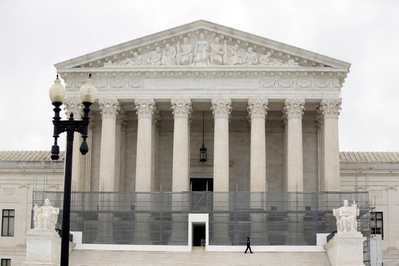
This term has already produced significant rulings across various domains, but for advocates of the right to keep and bear arms, two key Second Amendment cases stand out: Wolford v. Lopez and United States v. Hemani. Oral arguments in both have concluded, and opinions are expected by the end of June 2026. These decisions will build on the framework established in New York State Rifle & Pistol Association v. Bruen (2022) and United States v. Rahimi (2024), which emphasize text, history, and tradition over means-end scrutiny for evaluating gun regulations. With a conservative majority on the Court, these rulings could further expand protections for law-abiding citizens while testing the limits of certain categorical restrictions.
The broader Second Amendment landscape post-Bruen has seen lower courts grapple with challenges to licensing schemes, sensitive-place restrictions, prohibited-person statutes, and bans on specific firearms or accessories. The Supreme Court has been selective in granting certiorari, focusing this term on narrower but impactful questions. However, numerous petitions involving assault weapons bans, large-capacity magazine limits, felon-in-possession laws, and age restrictions remain pending, with the justices appearing to await guidance from the current cases before acting on them.
Wolford v. Lopez: The Right to Bear Arms on Private Property Open to the Public
One of the most anticipated Second Amendment cases this term is Wolford v. Lopez, which examines Hawaii’s restrictions on carrying handguns onto private property open to the public. The law at issue requires express permission from the property owner before a licensed concealed-carry permit holder can bring a handgun onto such premises—typically businesses, stores, restaurants, and other venues accessible to the general public. Challengers argue that this presumptive prohibition violates the core right to bear arms for self-defense outside the home, as recognized in Bruen.
Hawaii’s statute creates a default ban unless the owner affirmatively consents, contrasting with the majority approach in other states where carry is generally permitted absent specific prohibition. This has led to a circuit split, with the Ninth Circuit upholding the law while the Second Circuit reached a different conclusion in a similar challenge. During oral arguments in January 2026, several justices expressed skepticism toward the state’s position, probing whether historical analogues from the founding era or Reconstruction period support such broad restrictions on private property that functions like a public forum.
Proponents of stricter regulation emphasize private property rights and the ability of owners to control what occurs on their land, including potential safety concerns in crowded commercial spaces. They point to historical laws regulating arms in certain gathering places. Conversely, gun rights advocates contend that the Second Amendment’s text—“the right of the people to keep and bear Arms”—extends to carrying for self-defense in places where law-abiding citizens are otherwise lawfully present. A ruling striking down Hawaii’s approach could invalidate similar laws in a handful of states and affirm that licensed carriers need not seek permission for routine activities like shopping or dining.
The case highlights tensions in post-Bruen jurisprudence between individual rights and competing interests like property and public safety. A decision favoring the challengers would likely accelerate litigation against other location-based restrictions, such as bans in parks, transit, or government buildings deemed “sensitive places.” It could also influence how courts evaluate the historical tradition of arms regulation, demanding more precise analogues rather than generalized modern policy rationales.
For millions of permit holders, the outcome carries practical significance. In a post-pandemic world with heightened awareness of self-defense needs, restrictions that effectively disarm individuals in everyday commercial settings undermine the right to bear arms. Observers expect the Court to reinforce Bruen’s directive that regulations must align with the nation’s historical understanding of the Second Amendment, potentially leading to a narrower construction of permissible “sensitive places.”
United States v. Hemani: Firearm Possession by Unlawful Drug Users
The second major case, United States v. Hemani, addresses 18 U.S.C. § 922(g)(3), which prohibits firearm possession by anyone who is an “unlawful user of or addicted to any controlled substance.” The respondent, Ali Danial Hemani, admitted to occasional marijuana use but was not under the influence at the time of possession. The Fifth Circuit held the statute unconstitutional as applied to him, finding insufficient historical support for a categorical ban on sober individuals based on past or intermittent drug use.
Oral arguments in March 2026 revealed divisions among the justices. The government defended the law as a longstanding measure tied to public safety, citing links between drug use and violence, and noting its application in cases like that of Hunter Biden. Challengers, however, stressed the lack of founding-era analogues for disarming people based on substance use absent evidence of current impairment or dangerousness. Historical traditions, they argued, focused on individualized determinations of threat—such as through surety laws or intoxication-specific rules—rather than broad status-based disqualifications.
This case intersects with evolving state laws legalizing marijuana, creating a patchwork where federal prohibitions conflict with state norms. A ruling narrowing § 922(g)(3) could protect lawful gun owners who use cannabis recreationally or medicinally in compliant states, provided they are not actively impaired. It might require the government to prove a more direct connection to danger, aligning with Rahimi’s emphasis on credible threats to safety. Conversely, upholding the ban broadly would preserve a tool for prosecutors but risk overbreadth, potentially sweeping in non-violent users far removed from any risk.
The decision will have implications beyond marijuana, affecting users of other controlled substances. It tests the boundaries of “who” may be disarmed under the Second Amendment. Lower courts have split on similar challenges, and Supreme Court guidance could standardize application of the history-and-tradition test to prohibited-persons categories. Many expect the Court to cabin the law’s reach, requiring evidence of contemporaneous impairment or individualized findings rather than presumptive lifetime or extended disqualification.
Broader Context and Pending Issues
While Wolford and Hemani are the only Second Amendment cases set for decision this term, the Court’s shadow docket and certiorari decisions signal ongoing interest. Petitions challenging assault weapons bans (e.g., Viramontes v. Cook County, National Association for Gun Rights v. Lamont), large-capacity magazine restrictions (Duncan v. Bonta), and felon-in-possession laws under 922(g)(1) have been repeatedly relisted but not yet granted. The justices appear poised to address these in future terms after clarifying foundational principles in the current cases.
Challenges to age-based restrictions (18-20-year-olds), NFA items like suppressors, and public transit carry bans also linger. The post-Bruen era has flooded courts with litigation, forcing reevaluation of decades-old gun control measures. The Supreme Court’s selective intervention aims to provide clarity without micromanaging every regulation, but each ruling reshapes the landscape for states, localities, and federal enforcement.
Critics of expansive gun rights warn that these decisions could undermine public safety amid ongoing debates over violence. Supporters counter that the Constitution demands fidelity to original meaning, placing the burden on government to justify burdens on a fundamental right. The current 6-3 majority has shown willingness to enforce textual and historical limits, though Chief Justice Roberts often seeks narrower grounds to preserve institutional legitimacy.
Implications for Gun Owners and the Future of Second Amendment Jurisprudence
A strong pro-2A outcome in both cases would mark continued progress in restoring the right to keep and bear arms to its historical scope. For concealed carriers, Wolford could affirm the ability to go about daily life armed without seeking piecemeal permission. For cannabis users and others, Hemani might decouple lawful substance use from automatic disarmament, reflecting changing societal attitudes and scientific understanding of impairment.
These rulings arrive against a backdrop of shifting politics, including a second Trump administration supportive of gun rights and ongoing state-level reforms toward constitutional carry. They will influence legislative efforts, enforcement priorities, and further litigation. Gun owners, particularly in restrictive jurisdictions, await relief from overbroad rules that treat law-abiding citizens as presumptive threats.
The end-of-term timing is significant. Decisions in late June allow time for implementation before the new term begins, while providing grist for public discourse during summer recesses and election cycles. As the Court wraps up, its Second Amendment output this year—though limited in volume—promises depth in refining the Bruen framework.
Ultimately, these cases underscore the Second Amendment’s vitality as a check on government power. By demanding historical justification for restrictions, the Court reinforces that rights are not privileges subject to legislative whim. As opinions drop in the final days of the term, Americans will gain clearer understanding of their constitutional protections in an era of evolving threats and technologies. The 2025-2026 term’s close marks not an end but another step in the ongoing project of constitutional restoration.