One Nation, Fifty Carry Maps: The Supreme Court, Congress, and Firearms Across State Lines
The Second Amendment protects an individual right to keep and bear arms. After District of Columbia v. Heller (2008), McDonald v. City of Chicago (2010), and New York State Rifle & Pistol Association v. Bruen (2022), that right is no longer confined to the home. It includes public carry for self-defense. What neither the Court nor Congress has finished is the practical question every traveler meets at the next welcome sign: does the right travel with the citizen, or does it expire when the pavement changes color?
Americans move constantly—for work, family, hunting, and ordinary interstate life. Firearms law does not. Permit rules, “sensitive place” lists, magazine limits, and reciprocity maps change at every border. The result is a constitutional right that is national in theory and fragmented in practice. Recent Supreme Court decisions, pending petitions, federal transport statutes, and a cluster of 2025–2026 bills now sit at the center of that tension. Together they ask a single question in two dialects: the Court asks whether the Constitution already supplies one standard; Congress asks whether a statute should.
From the Home to the Public Square
Heller established that the Second Amendment protects an individual right, not merely a collective militia interest. The Court tied that right to weapons “in common use” for lawful purposes and to self-defense in the home. McDonald applied the right to the states through the Fourteenth Amendment. Bruen completed the core triad. The right to “bear” arms includes carrying a handgun outside the home for self-defense. Courts may not uphold restrictions by balancing public-safety interests against the right. If the plain text covers the conduct, the government must show the regulation is consistent with the Nation’s historical tradition of firearm regulation.
Justice Thomas’s opinion in Bruen treated “bear” as a right of ordinary, law-abiding people in public. The Court noted that 43 states already issued carry licenses on objective criteria. Six “may-issue” jurisdictions, including New York, required a showing of special need. That extra hurdle was unconstitutional. United States v. Rahimi (2024) later confirmed that history-and-tradition review is not a demand for a colonial photocopy of every modern statute. It is a demand for a relevantly similar analogue—same kind of burden, same kind of justification.
Bruen did not write a national carry license. It left states free to run shall-issue systems and to regulate how carry occurs, so long as those systems do not effectively deny the right. That gap is why interstate travel remains the unfinished chapter. A New Yorker who finally obtained a license after Bruen still cannot assume that license means anything in New Jersey. An Indianan who carries under state law still cannot assume the same conduct is lawful two hours west on I-70. The Constitution the Court described is national. The licensing machinery it left standing is local.
Federal Safe Passage: 18 U.S.C. § 926A
Congress tried to solve part of the problem in 1986. Section 926A of Title 18 provides that a person not otherwise prohibited from possessing a firearm “shall be entitled to transport a firearm for any lawful purpose from any place where he may lawfully possess and carry such firearm to any other place where he may lawfully possess and carry such firearm,” notwithstanding contrary state or local law.
The protection is narrow. The firearm must be unloaded. Neither the gun nor ammunition may be readily accessible from the passenger compartment. In a vehicle without a separate trunk, the firearm must be in a locked container other than the glove box or console.
Section 926A is a transport statute, not a carry statute. It is designed for through-travel: driving from a legal origin to a legal destination with the gun secured. Courts and the Justice Department have long treated overnight stops, fuel, food, and emergencies as part of that transportation. Break the chain—unload the gun and carry it into a restaurant in a hostile jurisdiction—and the federal shield disappears.
That distinction matters. Transport is not “bearing.” Bruen protects bearing. A locked case in the trunk may keep a traveler out of jail on the New Jersey Turnpike. It does not let him defend himself at a rest-stop parking lot. Until the Supreme Court says whether a traveler may keep a defensive handgun accessible while crossing a restrictive state, § 926A remains the main federal floor, and it is a low one. Travelers who fly face still another problem. Checked-baggage rules and local airport arrests have produced cases in which passengers complied with federal aviation rules and still faced state charges. The Department of Justice has even opined that a related mailing restriction, 18 U.S.C. § 1715, is unconstitutional as applied to constitutionally protected firearms, because it makes ordinary interstate movement of a handgun needlessly difficult. That opinion is not a statute. Section 926A still is.
Wolford and a Uniform National Standard
In June 2026 the Court decided Wolford v. Lopez. Hawaii, after Bruen, adopted a rule that made it a crime for licensed concealed-carry holders to bring a handgun onto private property open to the public—stores, restaurants, gas stations—unless the owner gave express consent. Similar “vampire” or default-ban rules existed in California, Maryland, New York, and New Jersey.
Writing for a 6–3 majority, Justice Alito held that the law fell within the plain text of the Second Amendment and was therefore presumptively unconstitutional. Hawaii failed to produce a relevantly similar historical tradition. Isolated antebellum surety or plantation statutes were not analogues for a default ban on licensed carry in ordinary commercial spaces. Early anti-poaching laws aimed at unauthorized hunting on private land were not relevantly similar to a ban on licensed carry in businesses that invite the public inside.
Two points in Wolford reach beyond Hawaii. First, the Court reiterated that the Second Amendment is a uniform national standard. Local custom or “the spirit of Aloha” cannot shrink the right. The scope of the right does not vary from state to state because local attitudes differ. Second, the decision treats public-facing private property as part of the daily life in which Americans may carry for self-defense. A traveler who lawfully enters a state and lawfully holds a permit is not, under Wolford, automatically disarmed the moment he walks into a grocery store.
Wolford is not a reciprocity decision. It does not force Minnesota to honor a Florida permit. It does make it harder for states to convert every parking lot and café into a no-carry zone after a visitor has already complied with local licensing. Combined with Bruen, it also undercuts the idea that a state may use property-law labels to recreate the old may-issue veto in a new form. Property owners may still exclude. The state may not presume exclusion for every business open to the public and then call the presumption a tradition.
The Reciprocity Patchwork the Court Has Not Yet Resolved
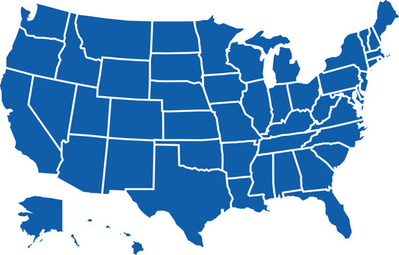
Most states recognize at least some out-of-state permits. A minority recognize none, or recognize only a short list. Constitutional-carry states allow residents—and sometimes visitors—to carry without a permit at all. The map is unstable and poorly understood even by police. A driver who is legal in Ohio can become a felon in New York without changing anything except the mile marker.
Petitions have asked the Court to treat that patchwork as a Second Amendment problem. In Gardner v. Maryland, a Virginia permit holder traveling through Maryland was prosecuted after displaying a handgun during a roadside confrontation. Maryland does not honor Virginia permits. The Court denied certiorari in April 2026. Denial is not a ruling on the merits, but it left the traveler’s problem untouched.
A newer petition, Johnson v. Jacobson (No. 26-255), presents a cleaner vehicle. Jeffrey Johnson, a long-haul trucker with valid Florida and Georgia carry licenses, cannot legally carry through Minnesota because those states are not on Minnesota’s reciprocity list. He may apply for a Minnesota nonresident permit, but that is not the same as carrying while he is already on the road. The Eighth Circuit upheld Minnesota’s scheme. The petition, filed in late August 2026 by counsel associated with the Liberty Justice Center, asks whether the right to bear arms belongs to the citizen or only inside the state that issued the paper.
If the Court grants review, the question will be whether Bruen’s text-and-history test requires states to treat a valid out-of-state permit as sufficient, or whether a state may force every visitor through its own licensing office. Historical analogues will matter. Travelers in the Founding and Reconstruction eras were often treated as temporary sojourners, not as people who had to re-qualify at every county line. Some early statutes exempted travelers from local concealed-carry restrictions. Late-nineteenth-century surety laws and concealed-carry bans cut the other way. Gun-rights groups have already framed the history in amicus briefs in related cases, including Gardner, arguing that a general right to publicly carry arms for self-defense cannot coexist with each state requiring visitors to undergo a costly, time-consuming local permit process before the right revives.
The Court has not yet chosen. Until it does, the constitutional argument for one standard remains a petition, not a holding.
Nonresidents, Purchases, and Other Borders
State high courts have begun filling the vacuum. In March 2025 the Massachusetts Supreme Judicial Court held, in Commonwealth v. Marquis and a companion case, that the Commonwealth’s post-Bruen nonresident licensing scheme is facially consistent with the Second Amendment and does not violate the right to travel or equal protection. Out-of-state visitors must still obtain a Massachusetts license on Massachusetts terms, including a suitability inquiry. That is one model: the right exists, but the ticket is local. The court reasoned that the state’s interest in keeping arms away from people shown to be dangerous applies equally to residents and visitors. Critics answer that a right which can be exercised only after weeks of paperwork in a foreign capital is not a right that travels.
Federal commercial rules add another border. Section 922(a)(3) generally requires that a handgun purchased out of state be transferred through a federal firearms licensee in the buyer’s state of residence. Lower courts after Bruen, including the Second Circuit, have treated that channeling rule as a commercial regulation that does not meaningfully prevent a person from acquiring a gun at home. It does, however, complicate a traveler who wants to buy a defensive firearm while away and take it home the same day. The Fifth Circuit and other courts continue to see post-Bruen challenges to the out-of-state purchase rules. Those cases are about acquisition, not carry, but they rest on the same idea: interstate movement of arms is part of the right, not a privilege the government may reroute at will.
NFA items—short-barreled rifles, suppressors, machine guns—face still another overlay. Interstate movement of those firearms has long required specific ATF authorization under 18 U.S.C. § 922(a)(4). Proposed rules in 2026 would authorize more routine, short-term interstate transport if the destination is lawful and the traveler complies with § 926A while passing through hostile jurisdictions. Those rules are administrative, not constitutional holdings. They illustrate the same problem at a higher level of regulation: even a federally registered arm does not move freely.
Congress’s “One Permit for All States” Proposals
Congress, not the Court, has been the usual forum for a single nationwide carry rule. No such statute is law. The leading proposal in the 119th Congress is the Constitutional Concealed Carry Reciprocity Act of 2025. Representative Richard Hudson (R-N.C.) filed the House version, H.R. 38, on January 3, 2025. It would amend Title 18 so that a person who may lawfully carry a concealed handgun in his home state—whether by permit or because that state is permitless—may carry a concealed handgun in any other state that allows its own residents to carry concealed. The traveler would need federal eligibility to possess a firearm and photo identification. Machine guns and destructive devices are excluded. The bill would preempt most conflicting state and local carry rules and create a private right of action if an official interferes with the federal right.
H.R. 38 does not create a new federal permit. It treats the home-state authorization as the ticket that works everywhere residents of the destination state may carry. That is the “one permit” model in statutory form: not a Washington-issued card, but a rule that the card you already have, or the permitless status you already enjoy, follows you. The bill gathered 189 cosponsors—nearly all Republicans, plus one Democrat. The House Judiciary Committee ordered it reported, as amended, on March 25, 2025, and on October 3, 2025, it was placed on the Union Calendar as Calendar No. 289 with House Report 119-337. It has not received a House floor vote.
Senator John Cornyn (R-Texas) filed the Senate companion, S. 65, on January 9, 2025, with roughly four dozen Republican cosponsors including John Thune, Ted Cruz, Chuck Grassley, Thom Tillis, and Mike Lee. S. 65 was read twice and referred to Senate Judiciary the same day and has not advanced. The National Rifle Association, Gun Owners of America, the U.S. Concealed Carry Association, and the National Shooting Sports Foundation have backed the Hudson-Cornyn reciprocity model. President Trump has again endorsed “national right to carry,” including in public remarks in 2026. A House version of H.R. 38 passed in December 2017, 231–198, and died in the Senate. Hudson has reintroduced the bill in every Congress since. The filibuster remains the obstacle. Sixty votes, not a committee report, is the number that has never been there.
A second camp wants no permit at all. Representative Thomas Massie (R-Ky.) filed H.R. 645, the National Constitutional Carry Act, on January 23, 2025. It would impose a national permitless-carry standard of the kind used in a majority of states. The National Association for Gun Rights prefers that bill. NRA officials have said they support constitutional carry in principle but that the votes for Massie’s bill are not there, and that H.R. 38 is the measure that has cleared committee. Senator Mike Lee (R-Utah) filed a Senate counterpart, S. 4013, also titled the National Constitutional Carry Act, on March 5, 2026. It would rewrite 18 U.S.C. § 927 to bar states from imposing criminal or civil penalties, or financial barriers, on public carry by U.S. citizens who are otherwise eligible under federal and state possession law, resident or not. S. 4013 sits in Senate Judiciary.
A narrower measure, H.R. 8855, was filed May 15, 2026, by Representative Cory Mills (R-Fla.), with Representative Clay Higgins (R-La.) as a cosponsor. It would extend nationwide concealed-carry reciprocity under the LEOSA framework in 18 U.S.C. § 926B to certain members of the Armed Forces. It was referred to House Judiciary and has not moved. It is not a civilian “one permit” bill. It is a service-member carve-out built on the same logic: the person’s federal status should travel.
None of these bills is a Supreme Court filing. They are statutes that would do by preemption what Johnson v. Jacobson asks the Court to do by the Second Amendment: make lawful home-state carry travel with the citizen. Supporters argue that Congress already used the commerce power and the Fourteenth Amendment to protect other mobility rights, and that § 926A proves Congress knows how to override local gun rules for travelers. Opponents argue that reciprocity would force strict states to accept permits issued after thinner training and thinner vetting, and that federal preemption of local carry rules exceeds the proper role of Congress. Until one bill becomes law or the Court grants and decides a reciprocity case, the “one permit for all states” idea remains a filed proposal, not a governing rule.
Two Paths to the Same Destination
The Court path and the congressional path are not identical. A Supreme Court holding that the Second Amendment itself requires recognition of out-of-state permits—or of permitless status from a constitutional-carry home state—would bind every jurisdiction without a filibuster and without a future Congress’s repeal. It would rest on text and history, not on commerce-clause findings. It would also be narrower than Massie’s or Lee’s bills. The Court is unlikely to invent a federal permit. It is more likely, if it takes Johnson or a successor, to say that a state may not treat a law-abiding visitor as unarmed merely because the paper in his wallet was printed in Tallahassee instead of St. Paul.
A statute such as H.R. 38 would be broader in machinery and more fragile in politics. It would specify identification, define a qualified person, create a cause of action, and preempt local ordinances. It could also be narrowed, amended, or repealed. Constitutional-carry bills go further still. They would treat public carry by eligible citizens as the default in every state, not merely require states to honor one another’s licenses. That is why some groups prefer them and why others call them unpassable.
Both paths collide with the same facts on the ground. A trucker on I-94 should not have to memorize which of Minnesota’s recognized states include Georgia this year. A family driving from Evansville to the Smokies should not have to disarm at the Kentucky-Tennessee line, reload, then disarm again if they detour through a county with a local ban. Wolford already says that once a person is lawfully carrying, ordinary businesses open to the public are not a default forbidden zone. Reciprocity and constitutional-carry bills say the predicate—lawful carrying—should not reset at the border.
What History and Uniformity Imply
Bruen and Wolford together insist that the Second Amendment is not a local ordinance. The right is the same in Hawaii as in Indiana. States may require licenses, may keep guns out of true sensitive places, and may disarm people who are demonstrably dangerous. They may not redefine the right out of existence by making every public-facing space off-limits or by treating a neighboring state’s permit as a legal nullity the moment the driver crosses a painted line.
A national right that evaporates at state borders is hard to reconcile with that premise. Drivers’ licenses, marriage, and professional credentials already travel under well-understood rules. Firearms remain the outlier. Section 926A covers locked transport. Wolford covers licensed carry inside ordinary commercial spaces once a person is lawfully present. H.R. 38 and S. 65 would make home-state authorization the nationwide ticket. H.R. 645 and S. 4013 would make eligibility itself the ticket. Johnson v. Jacobson asks the Court to decide whether the Constitution already requires something in that family of results.
Until the justices take a reciprocity case or Congress enacts one of the pending bills, law-abiding travelers will keep doing what they have done since 1986: lock the gun, know the map, and hope a traffic stop does not become a test case. The Constitution they carry with them is national. The statutes they meet at the next welcome sign often are not. The filings are on the docket and on the calendar. The rule that would make one lawful carry valid in fifty states is not yet the law.