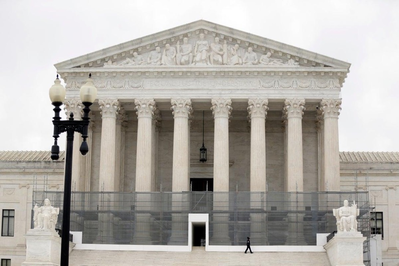
In a decisive display of legislative authority, the Kentucky General Assembly overrode Governor Andy Beshear’s veto of House Bill 312 on April 14, 2026. This pro-Second Amendment measure expands concealed carry rights to responsible young adults aged 18 to 20 through provisional licenses. The override underscores the Republican supermajority’s commitment to constitutional protections and reflects strong support for expanding lawful self-defense options in the Commonwealth.
Background on House Bill 312
HB 312, sponsored by Rep. Savannah Maddox (R-Dry Ridge) and supported by numerous co-sponsors, amends Kentucky law to authorize the Department of Kentucky State Police (KSP) to issue provisional concealed carry licenses to individuals aged 18, 19, and 20. Applicants must complete up to eight hours of firearm safety and training and pass state and federal background checks—the same rigorous standards applied to older applicants.
The bill builds on Kentucky’s existing constitutional carry law for those 21 and older, which allows concealed carry without a permit or training. For younger adults, the provisional license provides a structured pathway, requiring transition to a standard license upon turning 21. Proponents argue this promotes responsible gun ownership by encouraging education and vetting, rather than leaving young adults—who can already legally own firearms in Kentucky—without regulated concealed carry options.
The Veto and Override Process
Governor Beshear vetoed HB 312 on April 3, 2026, citing concerns about age restrictions in other areas of law, such as purchasing alcohol or renting cars. He also referenced the 2023 Old National Bank shooting in his veto message.
Lawmakers swiftly responded during the veto override session. The House voted 81-18 to override the veto, exceeding its original passage margin. The Senate followed with a 28-9 vote. The bill was enrolled as Acts Chapter 173 and delivered to the Secretary of State on April 14, 2026.
This override aligns with the legislature’s pattern of checking gubernatorial vetoes on gun-related issues, highlighting the broad bipartisan or supermajority consensus on Second Amendment matters in Kentucky.
Implications and Effective Date
The law takes effect around mid-July 2026, enabling eligible 18- to 20-year-olds to apply for provisional licenses via sheriffs’ offices or online through KSP. Firearm safety instructors and advocates have praised the measure for fostering trained, responsible carriers. As one instructor noted, regulated access with training is preferable to unregulated possession.
Critics, including some Democratic lawmakers, raised public safety concerns during debates. However, supporters emphasize that the bill upholds the individual right to bear arms for self-defense, consistent with historical traditions and recent court interpretations affirming rights for young adults.
Broader Context in Kentucky’s Pro-2A Landscape
Kentucky has steadily strengthened its firearms freedoms in recent years, including constitutional carry. HB 312 continues this trend, affirming that law-abiding adults should not be denied tools for self-protection based solely on age. The successful override sends a clear message: the legislature prioritizes constitutional rights over executive objections.
This development empowers young Kentuckians, particularly those in rural areas or facing potential threats, with legal means to defend themselves responsibly. As implementation begins, the focus will shift to effective training programs and seamless administration by the KSP.
Conclusion
The override of HB 312 represents a significant win for Second Amendment advocates across Kentucky. By rejecting the veto, lawmakers reinforced the principle that rights come with responsibilities—and that government should facilitate, not hinder, lawful exercise of those rights. Kentuckians aged 18-20 can now pursue provisional concealed carry with proper safeguards, advancing a culture of safety, preparedness, and constitutional fidelity in the Commonwealth.
In January 2025, Representative Thomas Massie (R-KY) introduced H.R. 645, the National Constitutional Carry Act, in the 119th Congress. This landmark legislation seeks to enforce the full protections of the Second and Fourteenth Amendments by prohibiting states and localities from restricting the public carry of firearms by law-abiding U.S. citizens who are eligible to possess them under federal and state law.
As of mid-2026, the bill remains in the House Judiciary Committee, but it has garnered significant attention from Second Amendment advocates. With nearly three dozen Republican cosponsors, including Reps. Lauren Boebert, Marjorie Taylor Greene, and others, H.R. 645 represents a bold effort to nationalize constitutional carry and eliminate patchwork permitting regimes that infringe on the right to bear arms.
This article examines the bill’s background, key provisions, legal foundations, potential impacts, and broader significance for American liberty.
Historical and Legal Context
The Second Amendment states: “A well regulated Militia, being necessary to the security of a free State, the right of the people to keep and bear Arms, shall not be infringed.” For much of the nation’s history, carrying firearms in public for self-defense was a common and largely unrestricted practice. The modern era of restrictive gun control emerged primarily in the 20th century, often in response to social and political pressures rather than rooted in the Constitution’s original meaning.
Key Supreme Court decisions have reaffirmed this right. In District of Columbia v. Heller (2008), the Court held that the Second Amendment protects an individual right to keep and bear arms for self-defense. McDonald v. City of Chicago (2010) extended these protections to the states via the Fourteenth Amendment. Most importantly, New York State Rifle & Pistol Association v. Bruen (2022) struck down subjective “may-issue” permitting schemes, emphasizing that the right to carry arms in public is protected and that regulations must align with the nation’s historical tradition.
Despite these rulings, many states continue to impose permit requirements, training mandates, fees, and other barriers that effectively burden or criminalize the exercise of this right. As of 2025, while 29 states had adopted some form of constitutional carry (permitless carry for eligible adults), restrictive jurisdictions like California, New York, and Illinois maintained stringent controls, creating a confusing and rights-infringing patchwork for travelers and residents alike.
H.R. 645 directly addresses this inconsistency by affirming that the Second Amendment’s protections are not contingent on state approval.
Key Provisions of H.R. 645
The bill is concise but sweeping. Section 1 provides the short title. Section 2 contains congressional findings that cite Heller, McDonald, and Bruen, underscoring that public carry is a pre-existing right essential to “the security of a free State.”
Section 3 amends 18 U.S.C. § 927 to read:
• (a) No State or political subdivision may impose criminal or civil penalties, or otherwise indirectly limit (including through financial or other barriers), the carrying of firearms in public by eligible U.S. citizens.
• (b) Any conflicting state or local laws, ordinances, regulations, customs, or usages “shall have no force or effect.”
• (c) “State” includes the District of Columbia, Puerto Rico, and U.S. possessions.
• (d) “Public” includes places open to the public (with exceptions for clearly posted private prohibitions and locations with firearm screening under state law).
The legislation explicitly covers both residents and nonresidents, ensuring nationwide reciprocity in practice without the need for permits. It does not create new federal restrictions or override federal prohibitions (such as those on felons or certain sensitive places already consistent with historical tradition). Private property owners retain the right to prohibit firearms on their premises if they communicate it clearly.
Arguments in Favor: Constitutional Fidelity and Public Safety
Proponents, including Rep. Massie, argue that H.R. 645 simply enforces the Constitution as written. “I’m fortunate to live in a state where people are free to exercise their right to keep and bear arms without begging the government or paying a fee,” Massie stated. The bill eliminates the need for law-abiding citizens to seek government permission to exercise a fundamental right.
Data from states that have adopted constitutional carry supports this approach. Studies and crime statistics from permitless carry states often show stable or declining violent crime rates, contradicting predictions of “Wild West” chaos. Organizations like the National Association for Gun Rights (NAGR) and American Firearms Association (AFA) have endorsed the bill, noting that armed citizens deter crime and that restrictive laws disproportionately affect the law-abiding while failing to disarm criminals.
For travelers, the bill would end the nightmare of navigating varying state laws during cross-country trips. Seniors, families, and those in high-crime areas would gain consistent self-defense options. In an era of rising urban crime in some jurisdictions, this legislation prioritizes the rights of potential victims over the preferences of gun-control advocates.
Potential Challenges and Criticisms
Opponents, primarily from anti-Second Amendment groups, claim the bill undermines state authority and could increase risks. They argue that permitting processes allow for background checks and training, though these are already addressed by federal NICS checks for purchases and the fact that many constitutional carry states maintain optional permits for reciprocity.
Legally, the bill relies on Congress’s power to enforce the Fourteenth Amendment and regulate interstate commerce implications of carry rights. Critics may challenge its scope, but post-Bruen jurisprudence strengthens its foundation. Implementation could face resistance from recalcitrant states, potentially leading to further litigation.
Practically, concerns about sensitive places or private property are addressed in the text. The bill does not prevent states from regulating carry in truly sensitive government facilities consistent with history and tradition.
Broader Implications for the Second Amendment Movement
If enacted, H.R. 645 would represent one of the most significant advancements in Second Amendment jurisprudence since Bruen. It would shift the default from government permission to constitutional presumption, aligning federal law with the original public meaning of the right to bear arms.
For advocates in states like Indiana, it would provide a national backstop against future restrictive legislation. It reinforces the principle that rights are not granted by government but protected from infringement. In the context of ongoing debates over ATF regulations, magazine bans, and other measures, this bill reaffirms that self-defense is a core civil right.
The legislation also highlights the importance of judicial appointments and congressional action in defending liberties. With strong support from grassroots groups, it could serve as a rallying point for further reforms, such as national reciprocity enhancements or challenges to remaining unconstitutional restrictions.
Conclusion: A Step Toward Constitutional Restoration
H.R. 645, the National Constitutional Carry Act, is more than a policy proposal—it is a declaration that the Second Amendment means what it says. By nullifying inconsistent state barriers to public carry, it seeks to create a uniform national standard rooted in the Constitution rather than bureaucratic discretion.
As the bill progresses, supporters are encouraged to contact their representatives, particularly members of the House Judiciary Committee. For Second Amendment advocates, passage would mark a victory for liberty, self-reliance, and the foundational principles that secure a free state.
In an uncertain world, the ability of law-abiding citizens to defend themselves and their families should not depend on geography or government approval. H.R. 645 moves America closer to realizing the full promise of the Second Amendment for all.
The Second Amendment to the U.S. Constitution states: “A well regulated Militia, being necessary to the security of a free State, the right of the people to keep and bear Arms, shall not be infringed.” In an era of renewed judicial scrutiny, this provision faces one of its most consequential tests yet. With the U.S. Supreme Court granting certiorari in consolidated cases Viramontes v. Cook County and Grant v. Higgins (June 30, 2026), the justices will directly confront whether the Second Amendment safeguards possession of AR-15 platform rifles and similar semi-automatic firearms “in common use” for lawful purposes such as self-defense.
These rifles, often mislabeled “assault weapons” in political rhetoric, represent the most popular class of sporting rifle in America. Estimates place the number of modern sporting rifles (MSRs), predominantly AR-15 variants, in civilian hands at over 30 million as of recent industry data. Lower courts have upheld bans in states like Illinois and Connecticut, but Bruen (2022) demands a history-and-tradition analysis that many argue these bans cannot survive. This article examines the constitutional text, precedent, historical context, empirical reality of common use, and policy implications to assess whether such rifles enjoy robust Second Amendment protection.
Text, History, and Original Public Meaning
The Second Amendment’s text protects an individual right to “keep and bear Arms.” Founding-era sources define “arms” broadly as weapons of offense or defense that citizens would use, including firearms. The prefatory clause references the militia—composed of ordinary citizens bearing their personal arms—reinforcing that the right encompasses weapons suitable for both personal and communal defense.
At ratification, Americans owned and carried repeating or multi-shot firearms, blunderbusses, and other advanced arms of the day. Private ownership of cannons and sophisticated weapons was common. The Amendment enshrined a pre-existing natural right, not one created by government. Semi-automatic technology, while modern, fits within this tradition: the core protection extends to arms in common use that enable effective self-defense and militia service. Banning the predominant rifle platform used by millions for lawful purposes would invert this understanding.
The Heller Framework: Common Use as the Touchstone
In District of Columbia v. Heller (2008), the Supreme Court held that the Second Amendment protects an individual right to possess firearms for self-defense in the home. Crucially, Justice Scalia’s opinion clarified that the Amendment protects arms “in common use at the time” for lawful purposes. Handguns prevailed because they were overwhelmingly chosen for self-defense; military-grade machine guns could be restricted as “dangerous and unusual.”
Heller explicitly rejected the notion that only weapons in existence in 1791 are protected. The Amendment “extends, prima facie, to all instruments that constitute bearable arms, even those that were not in existence at the time of the founding.” What matters is whether the weapon is commonly possessed by law-abiding citizens today for lawful ends. AR-15s easily meet this test. They are lightweight, accurate, modular, and reliable platforms used for home defense, target shooting, hunting, and competition. Criminal misuse, while tragic, does not strip protection from the vast majority of peaceful owners.
Bruen’s History-and-Tradition Test
New York State Rifle & Pistol Association v. Bruen (2022) extended Heller by confirming the right to carry arms in public for self-defense and establishing the proper analytical framework: regulations must be consistent with the nation’s historical tradition of firearm regulation. Analogies must be “relevantly similar” in how they burden the right and why.
No founding-era or Reconstruction-era tradition exists of banning an entire class of commonly owned rifles or magazines based on cosmetic features or semi-automatic function. Historical laws targeted specific misuse (e.g., concealed carry restrictions in sensitive places or disarmament of dangerous individuals), not broad prohibitions on popular arms. “Assault weapon” bans rely on features like pistol grips or detachable magazines—attributes that enhance usability for lawful self-defense. Lower courts upholding bans have strained to find analogues in militia regulations or hunting restrictions, but these lack the breadth and severity of modern bans.
Empirical Evidence of Common Use
AR-15 platform rifles are demonstrably “in common use.” Industry figures show tens of millions in circulation, with production surging in response to demand. Surveys indicate millions of owners across demographics, with many citing self-defense as a primary purpose. These rifles account for a significant share of rifle sales and ownership. They are not exotic military weapons but the standard modern equivalent of the musket or Kentucky long rifle—versatile tools for law-abiding citizens.
Courts and scholars note that AR-15s are used successfully in defensive encounters. Their accuracy, capacity, and ergonomics make them particularly effective against multiple threats or in scenarios where handguns fall short. Claims that they are “weapons of war” ignore that semi-automatic rifles have been civilian staples for decades, and fully automatic machine guns remain heavily restricted under the National Firearms Act. The common-use inquiry focuses on prevalence among the people, not selective media narratives.
Counterarguments and Government Positions
Opponents argue that AR-15s are “dangerous and unusual” due to their firepower and use in high-profile crimes. Some lower courts, like the Seventh Circuit in related cases, have likened them to M-16s and upheld bans by emphasizing military origins. They invoke public safety, mass shootings, and the need for legislative flexibility.
These claims falter under Bruen. Rarity of criminal use relative to ownership numbers does not render the arms “unusual.” Handguns feature more frequently in crimes yet remain protected. Historical tradition does not support disarming the general populace based on a weapon’s potential lethality; criminals, by definition, ignore laws. Data shows defensive gun uses vastly outnumber criminal ones annually, and semi-automatic rifles play a role in lawful defense. Banning them burdens the core right without sufficient historical pedigree.
Pending Supreme Court Cases and Broader Implications
In Viramontes v. Cook County, challenger Cutberto Viramontes contests a local ban mirroring Illinois’ statewide restrictions. Grant v. Higgins challenges Connecticut’s similar law. Consolidated for argument, these cases ask squarely whether the Second and Fourteenth Amendments guarantee the right to possess AR-15s and similar rifles.
A ruling affirming protection would likely invalidate “assault weapon” bans nationwide, following the Bruen model of returning discretion to the people and history rather than judicial policy preferences. It would affirm that Americans may choose effective tools for self-defense without government second-guessing. Conversely, deference to states could entrench a patchwork of restrictions undermining the national character of constitutional rights.
An Affirmative Answer Rooted in Text and Tradition
The Second Amendment protects possession of AR-15 platform and similar semi-automatic rifles in common use for lawful purposes like self-defense. Heller established the common-use standard; Bruen demands historical analogues that broad bans lack. With tens of millions owned by law-abiding citizens for legitimate ends, these rifles sit at the core of the protected right. Founding principles prioritized an armed populace capable of defense against tyranny and crime alike—not a disarmed citizenry reliant on government benevolence.
As the Supreme Court prepares to hear these cases, the stakes extend beyond one rifle model. The decision will clarify whether the Second Amendment remains a robust safeguard or yields to modern sensibilities. For defenders of liberty, the text, history, and empirical reality point clearly: Americans retain the right to keep and bear these arms. Policymakers should focus on prosecuting criminals rather than penalizing the tools preferred by the people. The Republic’s security depends on fidelity to this fundamental freedom.
Conclusion: Why This Stands Out
• The Court will decide whether the Second Amendment protects possession of AR-15-platform and similar semi-automatic rifles “in common use” for lawful purposes (like self-defense). These are the first major rifle-ban cases the Court has taken up after previously denying review in some earlier challenges.
• The cases will be argued together in the fall (October Term 2026), with a decision likely by summer 2027. This could invalidate “assault weapon” bans in multiple states (roughly a dozen have similar laws).
• It follows the Court’s recent pro-2A momentum, including the June 25, 2026, 6-3 ruling in Wolford v. Lopez striking down Hawaii’s restrictions on carrying handguns onto private property open to the public without owner consent, and the June 18 ruling narrowing the federal ban on gun possession by certain drug users (U.S. v. Hemani).
For pro-2A Advocates, this represents a strong opportunity for further expansion of rights under the Bruen historical-tradition test. Gun-control groups see it as a major threat to existing restrictions.
There was no single merits decision (with a recorded vote split) from the US Supreme Court directly resolving young adult (18-20) carry rights as of July 2026.
Key Context on Supreme Court Actions
• Denials of Certiorari: The Court has repeatedly declined to hear cases on age-based restrictions for carry or purchases (e.g., denials in June 2026 for cases like McCoy v. ATF, West Virginia Citizens Defense League v. ATF, and related petitions involving Florida and Pennsylvania rules). These denials let lower court rulings stand without the Supreme Court issuing a full opinion or formal vote. Denials of certiorari require only 4 votes to grant review (the “Rule of Four”). They do not usually disclose a full split, but justices sometimes issue statements. For example, Justice Clarence Thomas noted he would have granted review in at least one related age-restriction petition (WVCDL v. ATF). Other conservative justices have shown interest in similar cases in prior terms, but no broad 6-3 or other split was recorded on the young adult issue itself.
• Related 2026 Decisions (Not Directly on Age): For comparison, in Wolford v. Lopez (June 25, 2026, on private property carry restrictions), the Court split 6-3 along ideological lines (conservative majority striking down Hawaii’s law, with liberal justices dissenting). This reinforced Bruen but did not address age.
Lower Court Wins and the Supreme Court’s Indirect Role
The progress on young adult carry has come primarily from lower courts applying the Supreme Court’s Bruen (2022, 6-3) framework:
• Eighth Circuit (Worth v. Jacobson) and Florida Fourth DCA (2026) rulings in favor of 18-20 carry rights stood after SCOTUS denied review.
• Third Circuit rulings on Pennsylvania restrictions also remained intact.
In short, the Supreme Court has not taken a direct vote on the core question but has effectively allowed pro-rights outcomes in key circuits by denying cert (with at least some conservative justices supportive of hearing the cases). A future merits decision, if granted, would likely follow the familiar 6-3 pattern seen in Bruen and Wolford, given the Court’s composition and historical-tradition analysis favoring inclusion of young adults.
The US Supreme Court and Young Adult Carry: Expanding Second Amendment Rights for 18-to-20-Year-Olds
The Second Amendment’s protection of the right to keep and bear arms has seen significant clarification since District of Columbia v. Heller (2008) and New York State Rifle & Pistol Association v. Bruen (2022). A key frontier in post-Bruen litigation involves the rights of “young adults”—law-abiding citizens aged 18 to 20—to carry handguns for self-defense. While the US Supreme Court has not issued a sweeping merits decision squarely resolving age-based carry restrictions nationwide, its actions (and inactions) through denials of certiorari, combined with lower court applications of its framework, have advanced recognition of these rights in several jurisdictions.
Constitutional Text, History, and “The People”
The Second Amendment states: “A well regulated Militia, being necessary to the security of a free State, the right of the people to keep and bear Arms, shall not be infringed.” Founding-era understanding strongly supports inclusion of 18-to-20-year-olds. Militia laws from the colonial period and early Republic typically required able-bodied males, often starting at age 16 or 18, to arm themselves and muster with firearms. These young men were expected to defend the nation and their communities.
Heller affirmed that the right belongs to “law-abiding, responsible citizens” for self-defense, unconnected to militia service in the individual sense. Courts applying Bruen have repeatedly held that 18-to-20-year-olds are part of “the people” protected by the Amendment. They are adults under the law for voting (post-26th Amendment), military service, contracts, and criminal responsibility. Disarming them as a class treats the Second Amendment as a “second-class right,” as the Florida Fourth District Court of Appeal noted in its unanimous 2026 decision striking down that state’s concealed carry ban for young adults.
Historical analogues for blanket disarmament of this age group are scarce or nonexistent. While some 19th-century laws restricted certain activities (e.g., alcohol near militia musters), they did not categorically bar young adults from possessing or carrying arms for lawful purposes. Prohibitions on “infants” or minors typically applied to those under 18 or even younger.
The Bruen Framework and Its Application to Carry Rights
In Bruen (2022), the Supreme Court established a text-and-history test: If the plain text covers the conduct (carrying handguns in public for self-defense), the government must demonstrate the regulation is consistent with the nation’s historical tradition of firearm regulation. No interest-balancing or means-end scrutiny applies.
Post-Bruen, challenges to state laws barring 18-to-20-year-olds from obtaining carry permits or carrying openly/concealed have succeeded in multiple circuits. The Eighth Circuit in Worth v. Jacobson invalidated Minnesota’s permit age restriction, a ruling the Supreme Court allowed to stand by denying certiorari in April 2025. This opened carry permitting to young adults in that circuit.
Similarly, in June 2026, Florida’s Fourth District Court of Appeal unanimously struck down the state’s longstanding ban on concealed carry by 18-to-20-year-olds. The court emphasized that these citizens “fall within the class of ordinary, law-abiding adult citizens” and that no sufficient historical tradition supported the restriction. Florida’s Attorney General declined to defend the law, aligning with a constitutional reading. This made Florida approximately the 14th state effectively allowing young adult carry in some form.
The Third Circuit has also ruled favorably in Pennsylvania cases involving emergency carry restrictions, with the Supreme Court denying certiorari in June 2026, leaving the pro-rights ruling intact.
Federal law under 18 U.S.C. § 922 still restricts handgun purchases from licensed dealers to those 21 and older, creating a patchwork. Challenges to purchase bans have seen mixed results, with the Supreme Court denying certiorari in several cases in June 2026 (e.g., involving Florida and federal provisions), leaving some restrictions in place pending further litigation or circuit splits.
The Supreme Court’s Approach: Denials of Certiorari and Indirect Influence
As of mid-2026, the Supreme Court has not granted certiorari for a full merits decision on young adult carry or purchase rights. It has instead allowed several lower court victories for 18-to-20-year-olds to stand by denying review. This approach permits percolating issues in the lower courts while reinforcing Bruen’s principles through inaction where lower courts correctly apply history and text.
Justice Clarence Thomas has signaled interest in taking up the issue, dissenting or noting in orders related to age restrictions. The Court’s broader post-Bruen and Rahimi (2024) jurisprudence rejects categorical disarmament based on generalized notions of “dangerousness” or “irresponsibility” without strong historical support. Young adults, who can serve in combat and vote, do not fit neatly into disfavored categories.
Critics argue the Court should provide nationwide clarity to avoid inconsistent application across states. Supporters of restrictions claim historical traditions of age-of-majority distinctions (e.g., for alcohol or voting pre-26th Amendment) justify limits, but courts increasingly find these unpersuasive analogues for the core right to bear arms.
Implications for Self-Defense, Public Safety, and Federalism
Recognizing carry rights for 18-to-20-year-olds aligns with practical realities. This demographic faces elevated risks of victimization in many areas, including urban crime and rural isolation. Many are in college, entering the workforce, or starting families—situations where self-defense needs are acute. Military recruitment underscores their capability and responsibility.
Public safety concerns are addressed by existing laws: background checks, prohibitions on felons and the mentally ill, and “sensitive places” consistent with history. Data from states allowing younger carry (via permits or permitless) does not show disproportionate increases in misuse by this group compared to older adults when controlling for lawful ownership. Responsible young adults exercising their rights deter crime, consistent with the Amendment’s purpose.
Federalism allows experimentation: Some states maintain stricter rules, while others expand access. This laboratory of democracy, guided by constitutional floors from the Supreme Court, is preferable to one-size-fits-all federal mandates.
Challenges Ahead and the Road to Clarity
Circuit splits persist, particularly on purchase restrictions versus pure carry rights. Pending cases, such as those involving the Fifth Circuit’s rulings on federal purchase bans (Reese/FPC v. ATF), could return to the Supreme Court. A grant of certiorari seems likely if splits deepen, potentially yielding a definitive ruling that 18-to-20-year-olds enjoy full carry rights absent individualized disqualifications.
Advocates, including organizations like the NRA, SAF, and Firearms Policy Coalition, continue litigating and supporting legislative reforms (e.g., lowering permit ages or enacting constitutional carry). States like Tennessee have adjusted permit rules for young adults, though permitless carry often remains at 21.
Conclusion: Affirming Adulthood and Armed Citizenship
The Supreme Court’s decisions—through Bruen’s framework and strategic denials of certiorari—have catalyzed progress toward full recognition of young adults’ carry rights. These citizens are not second-class members of “the people.” Founding history, militia traditions, and modern responsibilities demand equal protection of the right to bear arms for self-defense.
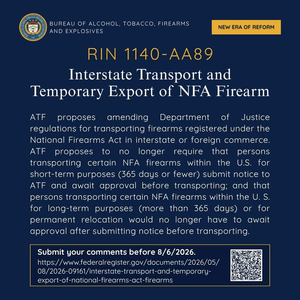
The Bureau of Alcohol, Tobacco, Firearms and Explosives (ATF) has issued a Notice of Proposed Rulemaking (NPRM) that promises meaningful relief for owners of National Firearms Act (NFA) items. Titled “Interstate Transport and Temporary Export of National Firearms Act Firearms” (RIN 1140-AA89), the proposal, published in the Federal Register on May 8, 2026, aims to modernize outdated administrative requirements under 27 CFR § 478.28 and 18 U.S.C. § 922(a)(4).
For decades, owners of machine guns, short-barreled rifles (SBRs), short-barreled shotguns (SBSs), and destructive devices have faced a cumbersome prior-approval process via ATF Form 5320.20 (Form 20) for interstate movement. This rule, part of a broader “New Era” reform package, seeks to eliminate unnecessary paperwork for short-term travel while maintaining core public safety and legality checks. Pro-Second Amendment advocates view this as a welcome acknowledgment that law-abiding citizens should not be treated as suspects for simply exercising their rights across state lines.
Current Requirements: The Form 20 Burden
Under existing regulations, individuals (non-FFLs or government entities) must submit ATF Form 5320.20 in advance for interstate transport or temporary export of affected NFA firearms. The form requires detailed information about the firearm(s), destinations, dates, and purpose. Owners must wait for ATF approval before moving the item, even for temporary trips like vacations, competitions, or hunting.
This process stems from the Gun Control Act of 1968, which prohibits transport of these items in interstate or foreign commerce without specific authorization from the Attorney General, deemed consistent with public safety and necessity. ATF uses the form to verify NFRTR registration and compliance with state and local laws at the destination. Silencers (suppressors) are exempt from this requirement, as are certain other NFA items like AOWs in many contexts.
In practice, the system has created significant delays and frustration. ATF data cited in analyses shows tens of thousands of Form 20 submissions processed over recent years, with denials often stemming from technical errors rather than substantive safety issues. For many owners, planning travel around ATF processing times has been a persistent hassle, especially for enthusiasts traveling to shooting events or ranges in neighboring states.
Key Provisions of the Proposed Rule
The proposal introduces categorical authorizations that differentiate based on trip duration:
• Short-Term Transport (365 days or fewer): No advance notice or ATF approval required. Owners may transport their lawfully registered NFA firearm interstate if it has a lawful purpose, remains legal at the destination, and they carry proof of registration (paper or electronic). This covers most common scenarios like range trips, competitions, or vacations.
• Long-Term or Permanent Relocation (more than 365 days): Submit notice via Form 5320.20 (or equivalent) at least 14 days in advance, but no waiting for approval is needed. Transport is authorized after the notice period unless ATF specifically objects.
• Temporary Export: The existing prior-approval process via Form 20 remains largely intact for foreign travel, reflecting international controls and re-importation requirements.
Additional clarifications include explicit authorization for pass-through travel through restrictive jurisdictions (provided compliance with 18 U.S.C. § 926A safe storage) and rules for common carriers, who would receive copies of registration documentation.
The rule explicitly states it does not alter underlying legality: Firearms must remain compliant with all federal, state, and local laws at every point. ATF emphasizes this change removes administrative burdens without compromising enforcement priorities.
Benefits for NFA Owners and Second Amendment Rights
This proposal represents a pragmatic reduction in regulatory friction. NFA ownership already involves strict registration, taxation, and compliance—often called the “NFA tax stamp” process. Eliminating pre-approval for short trips recognizes that the vast majority of owners are responsible citizens, not threats. ATF’s own low denial rate for substantive reasons underscores that the current system primarily generates paperwork rather than preventing crime.
For Indiana 2A Advocates and similar groups, this aligns with broader efforts to restore balance to firearms regulation. It eases burdens on collectors, competitors, and self-defense practitioners who might cross state lines. In a federal system with varying state laws, simplifying movement for lawful items strengthens the practical exercise of Second Amendment rights. Permanent moves still require notice, preserving ATF’s oversight where longer-term changes in possession occur.
Critics of overregulation will appreciate the acknowledgment that individualized approvals for routine travel are inefficient in the digital age, especially with NFRTR access for verification.
Potential Concerns and Implementation
While largely positive, some questions remain. States with strict NFA restrictions must still be respected— the proposal does not preempt local laws. Owners must ensure destinations permit the items. Enforcement details, such as what constitutes “lawful purpose” or adequate proof of registration during stops, will need clear guidance.
The comment period runs until August 6, 2026. Stakeholders should submit input via regulations.gov to refine the final rule. Concerns about potential abuse or inadequate verification could be addressed through stronger record-keeping recommendations or enhanced eForms integration.
FFLs receive explicit business-related exemptions, which is appropriate for commercial activities. Temporary export rules staying stricter makes sense due to international treaties and border security.
Conclusion
The ATF’s proposed rule on Interstate Transport and Temporary Export of NFA Firearms is a sensible reform that prioritizes burden reduction for compliant owners while upholding statutory requirements. By removing prior approval for short-term interstate travel and streamlining long-term notices, ATF moves away from treating every NFA owner as needing pre-clearance for ordinary activities.
This fits into a larger pattern of regulatory modernization under current leadership. For the firearms community, it means greater freedom to enjoy lawfully owned property without unnecessary federal hurdles. As comments are reviewed and the rule finalized, ongoing vigilance from 2A advocates will ensure it delivers on its promise without unintended consequences.
Law-abiding Americans deserve regulations that target criminals, not paperwork traps for the compliant. This proposal is a step in that direction— one that respects the Constitution’s protections while allowing effective law enforcement. NFA owners should review the full NPRM, provide constructive feedback, and prepare for easier travel once implemented.
The Castle Doctrine traditionally allows individuals to defend their home without retreating from an intruder. Indiana has significantly broadened this concept. Under Indiana Code § 35-41-3-2, the protections extend beyond the physical dwelling to include curtilage (the area immediately surrounding the home) and, importantly, an occupied motor vehicle.
This expansion reflects the state’s policy of recognizing the unique vulnerability of individuals in their vehicles. When a person is lawfully inside their car—whether parked, stopped at a light, or driving—they are not required to flee if faced with an unlawful entry or attack. The law presumes a reasonable fear of harm in such situations, allowing the occupant to use reasonable force, including deadly force, to prevent or terminate the intrusion.
For example, if an aggressor attempts to break into or forcibly enter an occupied vehicle with intent to harm the occupant, the driver or passenger may respond with proportionate force without first trying to escape. This applies even if retreat might seem possible, emphasizing the principle that one should not have to abandon their safe space.
Stand Your Ground: No Duty to Retreat
Indiana is a Stand Your Ground state, meaning there is generally no obligation to retreat before using force in self-defense when lawfully present. This principle intertwines with the Castle Doctrine but applies more broadly to any place where a person has a legal right to be, including public roads, parking lots, and workplaces.
In the context of vehicles, Stand Your Ground reinforces the Castle Doctrine. A vehicle occupant who reasonably believes they face imminent serious bodily injury, a forcible felony, or an unlawful entry does not need to drive away or de-escalate by fleeing if doing so would be unsafe or impractical. The law prioritizes the defender’s reasonable perception of the threat over hindsight analysis.
Key triggers for deadly force without a duty to retreat include:
• Preventing serious bodily injury to oneself or a third person.
• Stopping the commission of a forcible felony (such as robbery, rape, or aggravated battery).
• Halting an unlawful entry into or attack on the occupied vehicle.
These provisions empower law-abiding citizens to protect themselves decisively when confronted by violent threats in or around their vehicles.
Specific Application to Occupied Vehicles
Indiana law explicitly treats an occupied motor vehicle as protected space under the Castle Doctrine. “Occupied” generally means the defender is inside the vehicle at the time of the threat. This covers situations like carjackings, road rage incidents where an aggressor exits their vehicle to attack, or attempts to drag someone from their car.
Consider a scenario where a driver is stopped at a traffic light and an armed individual approaches, smashing the window and reaching inside. The driver, reasonably fearing for their life, may use deadly force if necessary to stop the attack. The law does not require the driver to attempt to speed away first, especially if traffic or other dangers make retreat riskier.
Protections also extend to passengers. Any occupant with a reasonable belief of imminent harm can act in self-defense or defense of others. However, the force must remain proportional: deadly force is typically reserved for threats involving serious injury or felonies, not minor property disputes.
The statute draws a clear distinction between defending people and mere property. While reasonable non-deadly force may protect belongings outside the vehicle context, deadly force inside or against an occupied vehicle intrusion hinges on the personal safety element.
Limitations and Responsibilities
Despite strong protections, Indiana’s self-defense laws are not a blanket immunity. Several important limitations apply:
• No Provocation or Initial Aggressor: A person cannot claim self-defense if they provoked the confrontation with intent to cause harm or were the initial aggressor, unless they clearly withdraw and communicate that intent, and the other party continues the threat.
• Commission of a Crime: Self-defense is unavailable if the defender was committing or fleeing from a crime at the time.
• Public Servants: Special rules govern interactions with law enforcement or other public servants. Force against them is justified only under narrow circumstances, such as when the officer is acting unlawfully.
• Reasonableness Standard: Courts evaluate claims based on what a reasonable person would believe in the same situation. Factors include the aggressor’s actions, weapons involved, disparity in size or strength, and the overall context. After an incident, evidence like witness statements, video footage, and injury patterns will be scrutinized.
• Civil Immunity: Indiana provides civil liability protections for those who justifiably use force in self-defense, shielding them from many lawsuits by the aggressor or their estate.
Individuals must still exercise sound judgment. Overuse of force or continuing to act after the threat ends can undermine a self-defense claim.
Real-World Implications and Practical Considerations
Vehicle-related self-defense cases often arise in high-stress environments like parking lots, highways, or urban areas. Hoosiers should familiarize themselves with these laws to make informed decisions. Training in de-escalation, situational awareness, and legal firearms handling (where applicable) complements statutory rights.
For instance, maintaining a clear escape route when possible, though not legally required, can demonstrate reasonableness. Documenting threats via dashcams or cell phones can provide crucial evidence.
Indiana’s approach balances individual liberty with public safety, affirming that citizens need not become victims in their own vehicles. By codifying these protections, the state sends a clear message: lawful occupants have the right to defend themselves vigorously against unlawful aggression.
Conclusion: Empowerment Through Knowledge
Indiana’s Stand Your Ground laws and Castle Doctrine offer powerful safeguards for those occupying their vehicles, treating the car as a mobile extension of the home. By removing the duty to retreat and justifying necessary force against serious threats, these statutes empower residents to protect themselves and their loved ones without hesitation in the face of danger.
However, these rights come with responsibilities. Self-defense claims succeed based on reasonableness, proportionality, and adherence to the law’s boundaries. Understanding the nuances of Indiana Code § 35-41-3-2 is essential for every driver. In moments of crisis, knowledge of these protections can mean the difference between victimization and survival.
Hoosiers are encouraged to consult legal professionals for personalized advice and to stay informed about any legislative updates. Ultimately, these laws reflect Indiana’s commitment to the fundamental right of self-preservation, ensuring that citizens can navigate daily life with confidence in their ability to defend what is theirs—including the vehicle that carries them.
In Indiana, self-defense (including deadly force) is governed primarily by Indiana Code (IC) 35-41-3-2. Indiana is a strong “Stand Your Ground” and Castle Doctrine state with no duty to retreat if you are lawfully present and reasonably believe force is necessary.
Key Provisions of IC 35-41-3-2 (Summary)
• You are justified in using reasonable force (including deadly force) to protect yourself or a third person from what you reasonably believe is the imminent use of unlawful force.
• Deadly force (force creating a substantial risk of serious bodily injury) is specifically justified, with no duty to retreat, if you reasonably believe it is necessary to prevent:
• Serious bodily injury to yourself or another.
• The commission of a forcible felony (a felony involving the use or threat of force against a person, or imminent danger of bodily injury).
• Unlawful entry into or attack on your dwelling, curtilage (immediate surrounding area), occupied vehicle, etc.
• Limitations: You cannot be the initial aggressor (unless you clearly withdraw), be committing a crime, or provoke the confrontation. The force used must be proportional/reasonable under the circumstances.
“2 vs 1” and Disparity of Force
“Disparity of force” is a key concept in self-defense cases across the U.S., including Indiana. It recognizes that factors like numbers of attackers, size/strength differences, age, weapons (or lack thereof), and positioning can elevate an otherwise “unarmed” assault to a threat of death or serious bodily injury.
• Multiple attackers (2 vs 1 or more): Being outnumbered is a classic disparity of force scenario. Courts and self-defense experts widely recognize that one person facing two or more assailants faces a dramatically heightened risk of serious injury or death — even if the attackers are unarmed. The group can overwhelm, stomp, beat, or otherwise inflict grave harm that a single person could not.
• In Indiana, this ties directly into the “reasonable belief” standard and justification for deadly force to prevent serious bodily injury or a forcible felony. You do not have to wait to be beaten unconscious or killed; the law evaluates what a reasonable person in your position would believe at the time.
Example: If two people are aggressively advancing on you, punching/kicking, or threatening serious harm (especially if you’re at a disadvantage due to size, age, position, or surprise), deadly force can be justified if you reasonably fear serious bodily injury. You can generally defend against the group threat as a whole.
Important Caveats
• Reasonableness is key and judged objectively (what a reasonable person would do in your situation) + your subjective belief. Juries consider all facts: the attackers’ actions, words, numbers, weapons, your ability to retreat safely (though no legal duty in most cases), etc.
• Proportionality: Excessive force after the threat ends (e.g., continuing to shoot after they’re down and no longer a threat) can negate the defense.
• Initial aggressor: If you started the fight, the defense is generally unavailable unless you clearly tried to withdraw.
• Aftermath: Even if justified, you may face investigation, arrest, or civil suit (though Indiana provides civil immunity for justifiable self-defense in many cases). Evidence like video, witnesses, and injuries matters hugely.
• This is not legal advice. Laws are fact-specific, and outcomes depend on the exact circumstances, evidence, and prosecutorial discretion. Consult a qualified Indiana attorney or firearms/self-defense instructor familiar with local case law for personalized guidance. Training (e.g., on use of force) is highly recommended.
For the most current official text, search the Indiana General Assembly site (iga.in.gov) for IC 35-41-3-2. Stay safe, know the law, and seek competent licensed legal counsel.
American gun owners live under a confusing and often punitive system of varying state concealed carry laws. As of 2026, approximately 29 states have adopted constitutional carry, also known as permitless carry, allowing eligible law-abiding adults to carry concealed firearms without a government-issued permit. These states recognize that the Second Amendment does not require a permission slip from the government. In contrast, other states maintain shall-issue or may-issue permitting systems with varying training, fees, and restrictions, while a handful impose severe limitations that effectively disarm citizens.
This fragmentation creates real dangers for travelers. A driver’s license from Indiana is valid nationwide, but a concealed carry permit from the same state may not be recognized in neighboring states or across the country. Crossing a state line can transform a responsible gun owner into a felon overnight. This violates the spirit of the Constitution, which establishes a national right, not one confined by arbitrary borders. The Founders intended the Second Amendment as a check against tyranny and a guarantee of self-defense, not a privilege subject to bureaucratic whims.
Data from organizations like the Crime Prevention Research Center highlight that millions of Americans hold concealed carry permits, and lawful gun owners are among the most law-abiding citizens. Yet outdated or hostile state laws continue to burden them, undermining public safety by disarming potential defenders in times of need.
Historical Context and the Push for Reciprocity
Efforts for national concealed carry reciprocity date back years, with bills like the Constitutional Concealed Carry Reciprocity Act gaining traction in Congress. In the 119th Congress, H.R. 38, sponsored by Rep. Richard Hudson (R-NC), aims to require states that allow their residents to carry concealed to recognize valid permits or eligibility from other states. A companion Senate bill, S. 65, has support from multiple senators.
These reciprocity measures build on the success of state-level reforms. As more states moved to constitutional carry, the case for federal consistency grew stronger. Reciprocity would honor existing permits while allowing constitutional carry residents to carry in recognizing states, providing a practical bridge toward fuller national recognition of the right.
President Trump’s Strong Support for National Carry
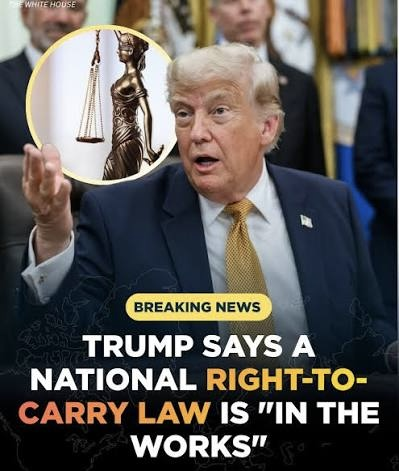
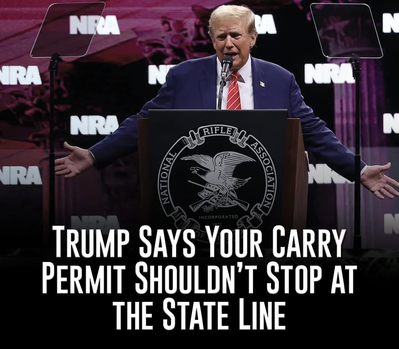
President Donald Trump has repeatedly voiced support for national concealed carry reciprocity, recognizing it as essential to protecting law-abiding citizens. In October 2025, Trump confirmed ongoing discussions, stating, “We are talking about that.” He has emphasized that the Second Amendment does not end at state lines and pledged to sign reciprocity legislation if it reaches his desk.
In recent statements and rallies, Trump has pushed for a “national right to carry” law, framing it as common sense aligned with driver’s license reciprocity. His administration’s pro-Second Amendment stance marks a historic opportunity. Trump’s support counters years of federal inaction and provides crucial momentum in a Republican-led Congress. By backing these efforts, he reaffirms his commitment to self-defense rights and restoring law and order through an empowered, armed citizenry.
Sen. Mike Lee’s National Constitutional Carry Act: A Bold Step Forward
Utah Sen. Mike Lee has taken a leading role with the introduction of the National Constitutional Carry Act in March 2026. This legislation goes beyond simple reciprocity by establishing nationwide permitless carry for eligible citizens—those not prohibited from possessing firearms under federal law.
In announcing the bill, Sen. Lee declared: “The Founders established a national right to keep and bear arms, not to ask for permission from hostile local officials, or risk imprisonment for crossing the wrong state line. Many states already protect the right to carry without a permit, and it’s time to reaffirm this right for all law-abiding Americans. The National Constitutional Carry Act will establish nationwide permitless carry to keep America safe and her people free.”
The House companion, introduced by Rep. Thomas Massie (R-KY), aligns with this vision. The bill would preempt restrictive state permitting requirements, fees, and penalties, while protecting the right to carry firearms, ammunition, and magazines of choice. It directly addresses the concerns of gun owners in states with hostile regulations, ensuring the Second Amendment applies uniformly.
Sen. Lee’s approach emphasizes constitutional principles over incrementalism. With 29 states already practicing constitutional carry, extending this liberty nationwide is a logical and overdue reform.
The Safety Record: Armed Citizens and Crime
Opponents claim national carry would increase violence, but evidence from states with reciprocity and constitutional carry tells a different story. Lawful concealed carriers have overwhelmingly low rates of criminality. Studies and real-world data show that shall-issue and permitless carry states often experience stable or declining violent crime rates, as armed citizens deter predators.
High-profile defensive gun uses occur daily across the U.S., frequently in states with permissive carry laws. National carry would empower more law-abiding Americans to protect themselves, their families, and their communities without fear of prosecution for technical violations. Criminals, by definition, ignore gun laws; restricting the rights of the law-abiding only tilts the balance in favor of predators.
Concerns about “chaos” or untrained carriers ignore that constitutional carry states have not seen the predicted spikes in crime. Instead, these reforms respect adult responsibility and have coincided with broader trends of declining crime in many areas. Training remains valuable and encouraged, but it should not be a federal or state-mandated barrier to exercising a constitutional right.
Addressing Counterarguments and States’ Rights
Critics, often from gun control organizations, argue that national carry overrides states’ rights and endangers public safety. They cite selective studies claiming increases in assaults or homicides after permitless carry adoption. However, correlation does not equal causation, and broader criminological research, including work by scholars like John Lott, demonstrates that right-to-carry laws do not increase crime and may reduce it through deterrence.
True federalism respects the Constitution’s supremacy on enumerated rights. The Second Amendment is not a suggestion left to state variation; it is a national guarantee. National carry legislation appropriately uses federal authority to prevent states from infringing on this right for non-residents, much like other areas of interstate commerce and privileges. States would retain authority over sensitive places and prohibited persons, consistent with Supreme Court precedents.
Private property rights and local regulations on specific locations (schools, courthouses) remain intact. The goal is not chaos but consistency for peaceable citizens.
Economic and Practical Benefits
Beyond safety, national carry offers practical advantages. It eliminates the burden of obtaining multiple permits, paying recurring fees, and navigating reciprocity maps for travelers, truckers, and families on vacation. This reduces administrative costs for states and frees law enforcement to focus on actual criminals rather than paperwork violations by visitors.
For businesses and tourism, a uniform standard removes uncertainty. Americans can travel confidently, knowing their right to self-defense travels with them. In an era of heightened threats—from urban crime to potential emergencies—empowering citizens strengthens societal resilience.
The Path Forward: Action in Congress and Beyond
With President Trump’s backing and champions like Sen. Mike Lee, the time for national carry is now. Congress should prioritize H.R. 38/S. 65 for reciprocity and advance the National Constitutional Carry Act to eliminate permitting barriers entirely. Grassroots advocacy, from groups like the NRA and Gun Owners of America, combined with public pressure, will be key to overcoming procedural hurdles.
State legislators in restrictive jurisdictions should also consider aligning with constitutional carry to reduce future conflicts. Ultimately, the Supreme Court may further clarify these rights through ongoing litigation, building on decisions affirming the individual right to bear arms for self-defense.
Conclusion: A Free People Bear Arms
National carry is not a radical innovation but a restoration of foundational American principles. The Second Amendment protects a pre-existing right to self-defense that knows no state boundaries. President Trump’s commitment and Sen. Mike Lee’s leadership provide a clear path to end the era of treating law-abiding gun owners as second-class citizens.
As more Americans recognize the failures of gun control in disarming the innocent while emboldening criminals, support for these reforms will grow. Passing national carry legislation will affirm that the right to keep and bear arms is truly national—ensuring safety, freedom, and equality under the law for all responsible citizens. The fight continues, but with unified resolve, 2026 could mark a turning point in securing liberty for generations to come.
Justice Clarence Thomas’ Warning in United States v. Hemani: Federal Gun Possession Laws and the Limits of the Commerce Clause
In a landmark unanimous decision on June 18, 2026, the Supreme Court in United States v. Hemani held that 18 U.S.C. §922(g)(3)—which prohibits firearm possession by “unlawful users” of controlled substances—violates the Second Amendment as applied to Ali Danial Hemani, a marijuana user. While the majority opinion by Justice Neil Gorsuch focused on the lack of historical tradition for disarming non-dangerous, occasional users under the Bruen framework, Justice Clarence Thomas penned a separate concurrence that spotlights a deeper structural issue: the federal government’s overreach under the Commerce Clause.
Thomas agreed fully with the Second Amendment holding but urged the Court and lower courts to reconsider whether §922(g) as a whole exceeds Congress’s enumerated powers. His concurrence revives long-simmering debates about federalism, original meaning, and the proper scope of congressional authority. This article breaks down Thomas’ arguments section by section, their constitutional foundations, implications for gun rights, and broader significance in the post-Bruen era.
Background: The Hemani Case and §922(g)
Ali Danial Hemani was indicted under §922(g)(3) after authorities found a Glock pistol and controlled substances (including marijuana) in his Texas home. The government did not allege that Hemani was intoxicated at the time of possession or that the gun was actively used in interstate commerce. Instead, it relied on his status as an “unlawful user” and the fact that the firearm had previously traveled in interstate commerce at some point in its history.
This “minimal nexus” approach stems from the Supreme Court’s statutory interpretation in Scarborough v. United States (1977), which courts of appeals have applied to satisfy the jurisdictional element of §922(g). Thomas’ concurrence highlights how this has enabled broad federal criminalization of purely intrastate possession by entire classes of people.
The decision in Hemani provides immediate relief for many state-legal marijuana users but leaves intact questions about the law’s foundational authority. Thomas seizes on this to argue that the Commerce Clause cannot sustain such expansive prohibitions.
Original Meaning of the Commerce Clause: No Power Over Mere Possession
Thomas begins with first principles. The Commerce Clause grants Congress power “To regulate Commerce… among the several States” (U.S. Const. Art. I, §8, cl. 3). As he has long contended, “commerce” at the Founding referred to the buying and selling of goods and services across state lines—not local activities or manufacturing, and certainly not mere possession.
Citing his dissent in Gonzales v. Raich (2005), Thomas explains that the Clause does not reach “activities wholly separated from business, such as gun possession.” He draws a sharp line: regulating the interstate market for firearms is one thing; criminalizing possession inside a home long after any sale or transport is another. Equating the two would grant Congress authority akin to regulating marriage, littering, or animal cruelty nationwide—powers reserved to the states.
This originalist view aligns with Thomas’ broader jurisprudence. In United States v. Lopez (1995), he concurred that the Gun-Free School Zones Act exceeded the Commerce Clause, criticizing the drift from the Clause’s textual and historical limits. In Hemani, he applies the same logic: §922(g) criminalizes intrastate possession detached from any commercial transaction. The government’s theory—that a gun’s distant interstate journey forever federalizes its possession—stretches “commerce” beyond recognition.
For Second Amendment advocates, this is potent. It suggests many federal gun laws rest on shaky constitutional ground, independent of historical tradition analysis.
Modern Precedents: Failure Under the Lopez Framework
Thomas next tests §922(g) against the Court’s post-New Deal Commerce Clause doctrine, as synthesized in Lopez. Regulations must fit one of three categories: (1) channels of interstate commerce, (2) instrumentalities of interstate commerce (or persons/things in it), or (3) activities that substantially affect interstate commerce.
Channels and Instrumentalities:
§922(g) fails the first two. It does not regulate the use of channels (e.g., prohibiting shipment of guns to prohibited persons during transport) but possession long after any crossing of state lines. It requires no showing that the specific possession risks interstate commerce. Thomas notes examples like a North Carolina-manufactured gun that briefly left the state before returning—still prosecutable under the statute.
Substantial Effects:
The third category is broadest but still limited. Lopez and United States v. Morrison (2000) emphasize that noneconomic, intrastate activity—like gun possession in a school zone or gender-motivated violence—cannot be aggregated to claim a substantial effect on commerce. Possession is not “economic activity.” §922(g) targets perceived threats to “public safety” and local crime, traditional state concerns, not commerce.
Thomas rejects bootstrapping via Raich’s “essential part of a larger regulation” logic. Unlike comprehensive drug market controls, §922(g) does not regulate an interstate gun or drug market; it disarms categories of people for safety reasons. Lower courts invoking a “jurisdictional hook” (the interstate travel element) misapply Lopez and Morrison.
The Scarborough Misunderstanding and Lower Court Errors
A key target of Thomas’ critique is the reliance on Scarborough. That case interpreted the statutory phrase “in or affecting commerce” to require only a past interstate journey—a statutory holding, not a constitutional one. Courts err when they treat it as blessing the law’s constitutionality under the Commerce Clause.
Thomas catalogs decades of judicial skepticism from judges across circuits (e.g., Batchelder, DeMoss, Ho, Willett, Mizelle), who have flagged the tension. Some upheld the law only because bound by Scarborough; others noted it converts the Commerce Clause into a general police power. He calls on courts to revisit the issue squarely.
Implications for Broader Federal Gun Laws
Thomas’ concurrence sweeps beyond §922(g)(3). It implicates the entire §922(g) framework, including felon-in-possession bans under (g)(1), though he notes the case does not decide those. If mere past interstate movement cannot federalize possession, challenges to other provisions become viable.
This has profound ramifications in a federalist system. States retain primary authority over local crime and gun possession by non-dangerous persons. Federal overcriminalization—prosecuting intrastate acts based on a gun’s manufacturing history—undermines dual sovereignty. For advocates in Indiana and beyond, it reinforces arguments for state-level protections and against ATF expansions.
In the marijuana context post-Hemani, millions in legal states gain relief, but Thomas’ view would go further: even without Second Amendment victory, the Commerce Clause might invalidate the prohibition.
Historical and Policy Context
Federal gun control expanded significantly with the 1968 Gun Control Act, justified partly under commerce. Lopez (1995) marked a revival of limits, striking the school-zone ban. Morrison reinforced boundaries on noneconomic regulation. Thomas has consistently pushed for originalism here, dissenting or concurring to cabin expansive readings.
Critics argue this risks undermining legitimate federal roles in interstate gun trafficking. Thomas counters that targeted regulations (e.g., prohibiting interstate sales to prohibited persons) remain available; blanket possession bans do not. His approach prioritizes enumerated powers over policy preferences for national uniformity.
Broader Constitutional Significance
Thomas’ opinion exemplifies his textualist-originalist methodology: start with the Constitution’s words and history, measure modern doctrine against them, and reject accretions that erode federalism. It echoes his Lopez concurrence, urging a return to “commerce” as trade, not all economic or social activity.
In an era of Bruen and renewed scrutiny of gun laws, pairing Second Amendment history-and-tradition with Commerce Clause limits strengthens individual rights and structural constitutionalism. Lower courts are now on notice to entertain these challenges seriously.
Potential future cases could test felon bans, mental health disqualifiers, or other §922(g) provisions on Commerce Clause grounds. Success would force Congress to tailor laws more narrowly or rely on other powers—reinvigorating the Tenth Amendment.
Conclusion: A Call to Revisit Federal Overreach
Justice Thomas’ concurrence in Hemani is more than a footnote; it is a blueprint for reclaiming constitutional boundaries. By warning that federal gun possession laws like §922(g) likely exceed the Commerce Clause—both originally and under precedent—he challenges the judiciary to confront decades of expansion.
For Second Amendment supporters, this offers hope beyond history-and-tradition: the federal government is one of limited, enumerated powers. Purely local possession, unconnected to active commerce, belongs to state regulation. As courts and litigants take up Thomas’ invitation, the decision may reshape the landscape of federal firearms law, restoring balance between national authority and individual liberty.
This warning underscores a core truth: constitutional rights are protected not just by explicit amendments but by the structural limits on federal power. In Hemani, Thomas reminds us that ignoring those limits endangers the entire framework of ordered liberty.
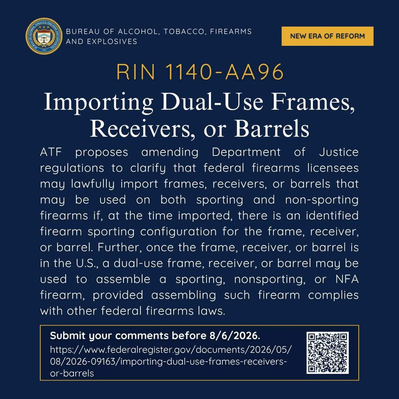
The Bureau of Alcohol, Tobacco, Firearms and Explosives (ATF) published a Notice of Proposed Rulemaking (NPRM) on May 8, 2026, titled “Importing Dual-Use Frames, Receivers, or Barrels” (RIN 1140-AA96). This proposal builds on ATF Ruling 2025-1 regarding dual-use barrels and extends similar logic to frames and receivers. It clarifies that Federal Firearms Licensees (FFLs) may import these components if they have an identified sporting configuration at the time of importation, regardless of prior use on non-sporting, military surplus, or National Firearms Act (NFA) firearms. Once imported, they can be used in a variety of assemblies, subject to other laws like 18 U.S.C. § 922(r).
This change promises to increase availability of parts, lower costs for American gun owners, and reduce arbitrary restrictions rooted in outdated policies. Comments are due by August 6, 2026. For Second Amendment advocates, this represents a pragmatic reform that prioritizes lawful commerce over excessive bureaucratic hurdles.
Historical Context of Firearm Import Regulations
The Gun Control Act of 1968 and Sporting Purposes Test
The foundation lies in the Gun Control Act (GCA) of 1968, particularly 18 U.S.C. § 925(d)(3), which generally prohibits importation of firearms not “generally recognized as particularly suitable for or readily adaptable to sporting purposes.” This extends to frames, receivers, and barrels that would form prohibited firearms if assembled.
Evolution of ATF Policy on Dual-Use Parts
Prior ATF guidance, including a 2005 open letter, took a restrictive view of “dual-use” barrels and parts. Importers faced limitations based on prior configurations or potential non-sporting uses. ATF Ruling 2025-1 marked an initial shift for barrels, recognizing that prior overseas use on military or NFA items should not permanently “taint” them if a sporting configuration exists at import.
The 2026 NPRM codifies and expands this, acknowledging the modular nature of modern firearms.
Breakdown of the Proposed Rule
Key Provisions
• Import Criteria: Focus shifts to whether an “identified sporting configuration” exists at importation, not prior history or dual potential.
• Post-Importation Use: Lawfully imported parts may be assembled into sporting, non-sporting, or NFA firearms, provided compliance with § 922(r), the NFA, and other laws.
• Regulatory Amendments: Changes to 27 C.F.R. §§ 478.39, 478.112, 478.113, 478.113a, and 478.114.
What Qualifies as “Dual-Use” and “Sporting Configuration”?
The rule addresses parts usable in both sporting (e.g., hunting, target shooting) and non-sporting configurations. “Identified sporting configuration” likely means the part can be assembled without modification into a sporting firearm, though comments may seek further clarity (especially for handguns).
Impact on Military Surplus and NFA Items
This opens importation of barrels and parts from surplus firearms previously restricted for decades, benefiting collectors and enthusiasts.
Benefits for Gun Owners, Industry, and Collectors
Increased Availability and Lower Costs
More imported parts mean greater supply, competition, and affordability for builds, repairs, and custom firearms.
Support for Modular and Modern Firearms
Modern designs blur lines between sporting and tactical. The rule adapts to this reality rather than fighting it.
Boost to Small Businesses and FFLs
Importers and manufacturers gain predictability, reducing compliance burdens and legal risks.
Second Amendment Implications
By easing access to common components without undermining core prohibitions on non-sporting complete firearms, the rule aligns with lawful ownership and self-defense rights.
Potential Concerns and Criticisms
Opponents may argue it indirectly facilitates non-sporting builds or circumvents import bans. However, the rule maintains § 922(r) and NFA compliance.
Implementation and Clarity Issues
Ambiguities around “identified sporting configuration” could lead to inconsistent enforcement. Advocates should submit comments for precision.
Enforcement Challenges
ATF must train personnel and update guidance to avoid overreach.
Comparison with Past ATF Policies
• 2005 Open Letter: More restrictive on dual-use barrels.
• Ruling 2025-1: Breakthrough for barrels.
• 2026 NPRM: Comprehensive extension to frames/receivers with post-import flexibility.
Legal and Constitutional Analysis
Alignment with Second Amendment Jurisprudence
Post-Bruen (2022), regulations must align with historical traditions. This reform reduces discretionary burdens on protected arms and accessories.
Administrative Procedure Act Considerations
The NPRM follows proper notice-and-comment procedures. Public input is crucial.
Potential for Litigation
While pro-2A overall, any final rule could face challenges from either side.
Economic and Market Impact Analysis
• Industry Growth: Expanded imports could add millions in economic activity.
• Consumer Savings: Lower part prices benefit hobbyists and professionals.
• Job Creation: In importation, manufacturing, and retail sectors.
State-Level Considerations (Focus on Indiana and Similar States)
Indiana’s strong 2A protections complement federal reforms. Advocates should monitor how state laws interact with imported parts. Similar dynamics apply in other pro-2A states.
International Trade and Foreign Policy Angles
The rule facilitates lawful commerce while respecting export controls and defense article distinctions.
3. For FFLs: Update import procedures and documentation.
4. Gun owners: Understand assembly rules remain in effect.
Public Comment Strategy for 2A Advocates
Emphasize benefits for lawful owners, technological adaptation, reduced bureaucracy, and economic gains. Request clear definitions and minimal burdens.
Related ATF Reform Initiatives
This NPRM is part of a broader “New Era of Reform,” including other proposals on trade zones, training rounds, etc.
Case Studies and Examples
• Military surplus barrels now more accessible.
• Modular AR-platform parts benefiting from clarity.
• Handgun frames/receivers in sporting configs.
Future Outlook and Recommendations
If finalized, monitor implementation. Advocates should push for further deregulation consistent with constitutional rights. Long-term, focus on congressional action for permanent statutory reforms.
The ATF’s dual-use import proposal is a welcome, common-sense reform that enhances access to firearm components for law-abiding Americans. It reflects evolving firearm technology and prioritizes practical governance over outdated restrictions. Second Amendment supporters in Indiana and nationwide should engage actively in the comment period to help shape a final rule that maximizes liberty while upholding public safety. This is progress worth building upon.
These reforms, framed as part of the agency’s “New Era of Reform,” aims to modernize legacy regulations, slash unnecessary paperwork, and ease burdens on law-abiding gun owners without compromising core safety measures.
These updates build upon the historic elimination of the $200 National Firearms Act (NFA) transfer tax stamp, effective January 1, 2026, through the One Big Beautiful Bill (H.R. 1). For Second Amendment advocates, hunters, and recreational shooters—particularly in pro-2A states like Indiana—this package represents meaningful progress toward recognizing suppressors as essential tools for hearing protection, recoil management, and responsible firearm use.
Historical Context and the Tax Stamp Elimination
Suppressors have been regulated under the NFA since 1934, when the $200 tax stamp—equivalent to thousands in today’s dollars—was imposed amid concerns over organized crime. For decades, this financial barrier, combined with lengthy ATF approval waits, fingerprints, photos, and local law enforcement notifications, limited widespread civilian adoption.
The 2025 passage and 2026 implementation of the tax elimination changed everything. Sales surged dramatically. The American Suppressor Association (ASA) reported that registrations grew from approximately 4.4 million in early 2025 to nearly 6 million by April 2026, with the first quarter of 2026 alone rivaling decades of prior growth. In Indiana, where suppressors are legal for ownership, possession, and hunting with no additional state restrictions, this opened doors for more residents to enhance safety at ranges and in the field.
Despite the tax victory, full NFA processes remained intact, prompting calls for further reform. The ATF’s April 2026 announcement directly responds to these concerns, aligning with Executive Order 14206 emphasizing Second Amendment protections.
Overview of the ATF’s 34 Rule Changes
The package spans five categories: burden reduction, modernization, clarification, repeal of outdated rules, and compliance improvements. Some rules are final and effective immediately; the majority are proposed notices of rulemaking (NPRMs) open for public comment, typically 60-90 days, via Regulations.gov. ATF Director Robert Cekada highlighted collaboration with industry stakeholders and a focus on practical governance.
Not all 34 directly target suppressors, but many impact NFA items broadly, including suppressors, SBRs, and machine guns. The agency estimates significant time and cost savings for applicants and Federal Firearms Licensees (FFLs).
Detailed Breakdown of Key Proposed Changes for Suppressors
Joint Spousal Registration (Trust Elimination for Couples):
One of the most practical changes allows married couples to jointly register suppressors and other NFA items on a single ATF Form 4. Previously, many families formed gun trusts solely to facilitate sharing, incurring legal fees and complexity. Under the proposal, spouses can share possession legally without this step, provided they meet eligibility requirements. This reduces barriers for households and reflects real-world use patterns where suppressors serve family safety needs.
Elimination of Chief Law Enforcement Officer (CLEO) Notifications:
Applicants will no longer submit copies of NFA applications to local CLEOs. This longstanding requirement raised privacy issues, as sensitive personal and financial data was shared locally. Removing it streamlines the process, protects applicant information, and eliminates potential delays from local responses. This is a major win for privacy-conscious owners.
Streamlined Interstate Transport Rules:
Reforms ease or eliminate certain notification requirements for transporting registered suppressors across state lines for temporary periods (e.g., less than 365 days for certain activities). Owners can more easily travel for competitions, hunting trips, or vacations without excessive ATF paperwork, provided the suppressor remains registered and compliant. This modernizes rules that have not kept pace with mobile lifestyles.
Modernization of Forms and Electronic Systems:
Updates to ATF Form 4473 (Firearms Transaction Record) simplify questions, improve clarity, and support electronic recordkeeping. For NFA transfers, enhanced eForms stability aims to reduce processing backlogs. Proposed changes also address record retention periods and digitization, potentially leading to faster approvals industry-wide.
Clarifications on Suppressor Parts and Components:
The package includes proposals to refine regulations governing suppressor parts, reducing ambiguity that previously complicated manufacturing, repairs, and ownership. This provides clearer guidance for both industry and individuals.
Repeals and Alignment with Court Precedents:
Several rules repeal or revise prior overreaches, such as aspects of the 2023 stabilizing brace regulations found unlawful by courts. While not suppressor-specific, these set a tone of regulatory restraint that benefits the entire NFA community. Additional proposals simplify registration procedures for NFA firearms overall.
Other Notable Reforms:
Improvements to import/export procedures, FFL operational rules, and compliance tools indirectly support a healthier suppressor market. The ATF also proposed revisions to the “engaged in the business” dealer definitions and other areas for clarity.
Implications for Gun Owners and the Firearms Industry
For individual owners, these changes translate to less hassle, lower costs (beyond the tax savings), and greater accessibility. A typical suppressor purchase or transfer becomes more family-friendly and travel-ready. In states like Indiana, where no additional permitting exists, the federal easing amplifies local freedom.
The industry has responded positively. Manufacturers continue innovating with lighter, more effective designs showcased at SHOT Show 2026. Retailers report sustained demand, and organizations like the ASA, supported by contributions from companies such as Rugged Suppressors and Palmetto State Armory, are actively commenting on the proposals to ensure pro-owner outcomes.
Public safety remains addressed through continued background checks via the National Instant Criminal Background Check System (NICS) and registration in the NFRTR. Criminal misuse stays prohibited, while law-abiding citizens gain practical relief.
Constitutional and Legal Developments
The ATF reforms coincide with important court rulings. In June 2026, the U.S. Court of Appeals for the Fifth Circuit held that suppressors are protected “arms” under the Second Amendment’s plain text. The court recognized their utility in making firearms safer and more effective for self-defense and sporting purposes by mitigating noise and recoil. Although the specific conviction for unregistered possession was upheld based on precedent, the ruling advances arguments against burdensome schemes and creates favorable precedent in key jurisdictions.
This decision, alongside earlier adjustments in related cases, bolsters challenges to the full NFA framework. Advocacy groups continue pushing for Supreme Court review where appropriate, emphasizing historical traditions of arms ownership.
Challenges, Public Comment, and Implementation
Many rules are still proposed, requiring robust public input. The ASA and other groups encourage detailed comments highlighting real-world benefits and any remaining issues. Implementation timelines vary: final rules may take effect soon after review, while proposed ones could evolve based on feedback.
Potential challenges include ensuring ATF resources match increased demand and addressing any state-law conflicts. Some states tie suppressor legality to federal NFA status, necessitating proactive legislative fixes.
Future Legislative Outlook
The ATF changes are regulatory, not statutory. Bills like the Hearing Protection Act (H.R. 404 / S. 364) and the SHUSH Act (H.R. 850) seek fuller removal of suppressors from the NFA, enabling purchases akin to standard firearms after a single background check. These enjoy strong support in pro-2A circles and could build on the current momentum.
For 2A Advocates, monitoring both federal and state developments remains key to preserving and expanding rights. Continued engagement with lawmakers and education on suppressor benefits—such as reduced hearing damage for shooters and bystanders—will drive progress.
Industry Innovation and Market Trends
2026 has seen a boom in suppressor technology. New releases emphasize modularity, lighter materials like titanium, and multi-caliber versatility. With tax and regulatory relief, more owners are exploring suppressed shooting for everything from home defense to varmint control and long-range precision.
Educational efforts highlight suppressors’ role in hearing conservation, countering outdated “silencer” myths. Nearly 6 million registered units demonstrate common-use status under Second Amendment analyses.
A Step Forward for Responsible Ownership
The ATF’s 34 rule changes mark a historic effort to reform NFA processes in ways that respect law-abiding citizens. By detailing joint registration, CLEO relief, transport easing, form modernization, and more, the proposals address longstanding pain points while upholding background checks and registration.
Coupled with the tax stamp removal, explosive market growth, judicial recognition of suppressors as protected arms, and ongoing innovation, 2026 represents a high-water mark for the suppressor community. Challenges remain—full NFA removal, state harmonization, and final rule implementation—but the trajectory is positive.
Gun owners are encouraged to review the proposals on ATF.gov, submit informed comments, and stay engaged. For those in Indiana and beyond, this is an opportunity to embrace safer shooting practices and advocate for continued reforms. As suppressors become more normalized as hearing protection devices, the benefits for public health, shooting sports, and constitutional liberties will only grow. Responsible ownership, education, and vigilance will ensure these gains endure.
In 2016, Harris County, Texas, Officer Roberto Felix Jr. pulled over Ashtian Barnes for unpaid toll violations. Barnes was ordered to exit the vehicle but instead started driving away. Officer Felix jumped onto the doorsill of the moving car, shouted commands, and fired two shots into the vehicle, killing Barnes. The entire incident from when the car started moving to when it stopped lasted about five seconds.
Barnes’ family sued, alleging the use of deadly force violated his Fourth Amendment rights against unreasonable seizures. Lower courts (District Court and Fifth Circuit) granted summary judgment in favor of the officer, applying the Fifth Circuit’s “moment of threat” rule. This rule limited the reasonableness analysis to only the precise moment when the officer perceived an immediate threat (here, when he was on the accelerating car).
Supreme Court Holding
The Supreme Court, in an opinion by Justice Elena Kagan, vacated the Fifth Circuit’s decision and remanded the case. It rejected the “moment of threat” doctrine (used by the Fifth, Second, Fourth, and Eighth Circuits) as too narrow.
Key points:
• Fourth Amendment excessive force claims must be judged under the totality of the circumstances, drawing from Graham v. Connor (1989). This inquiry has no strict time limit.
• Courts can (and must) consider the broader context of the encounter, including events leading up to the use of force, the severity of the crime, the suspect’s actions (e.g., flight), and the officer’s conduct.
• The decision is narrow and reaffirms longstanding precedent rather than creating a new sweeping rule. It resolves a circuit split by invalidating overly restrictive time-based limits.
Justice Kavanaugh wrote a concurrence (joined by Thomas, Alito, and Barrett) emphasizing the inherent dangers of traffic stops for officers.
Implications
• For excessive force litigation: Plaintiffs in police shooting cases can more easily argue that an officer’s prior actions or the overall situation contributed to the need for force (sometimes called “officer-created jeopardy”). Lower courts must now take a broader view on remand.
• For law enforcement: It doesn’t eliminate qualified immunity or make shootings automatically unlawful, but it requires a more holistic reasonableness review. Training may need adjustments to avoid creating avoidable high-risk situations.
• Pro-2A/Rights perspective: This case reinforces constitutional protections against unreasonable government force while balancing officer safety. It’s often discussed in contexts of accountability during traffic stops, which can intersect with gun rights encounters (e.g., stops involving armed citizens).
The case was remanded for further proceedings applying the broader standard. For the full opinion, check the Supreme Court’s site (23-1239).
This term has already produced significant rulings across various domains, but for advocates of the right to keep and bear arms, two key Second Amendment cases stand out: Wolford v. Lopez and United States v. Hemani. Oral arguments in both have concluded, and opinions are expected by the end of June 2026. These decisions will build on the framework established in New York State Rifle & Pistol Association v. Bruen (2022) and United States v. Rahimi (2024), which emphasize text, history, and tradition over means-end scrutiny for evaluating gun regulations. With a conservative majority on the Court, these rulings could further expand protections for law-abiding citizens while testing the limits of certain categorical restrictions.
The broader Second Amendment landscape post-Bruen has seen lower courts grapple with challenges to licensing schemes, sensitive-place restrictions, prohibited-person statutes, and bans on specific firearms or accessories. The Supreme Court has been selective in granting certiorari, focusing this term on narrower but impactful questions. However, numerous petitions involving assault weapons bans, large-capacity magazine limits, felon-in-possession laws, and age restrictions remain pending, with the justices appearing to await guidance from the current cases before acting on them.
Wolford v. Lopez: The Right to Bear Arms on Private Property Open to the Public
One of the most anticipated Second Amendment cases this term is Wolford v. Lopez, which examines Hawaii’s restrictions on carrying handguns onto private property open to the public. The law at issue requires express permission from the property owner before a licensed concealed-carry permit holder can bring a handgun onto such premises—typically businesses, stores, restaurants, and other venues accessible to the general public. Challengers argue that this presumptive prohibition violates the core right to bear arms for self-defense outside the home, as recognized in Bruen.
Hawaii’s statute creates a default ban unless the owner affirmatively consents, contrasting with the majority approach in other states where carry is generally permitted absent specific prohibition. This has led to a circuit split, with the Ninth Circuit upholding the law while the Second Circuit reached a different conclusion in a similar challenge. During oral arguments in January 2026, several justices expressed skepticism toward the state’s position, probing whether historical analogues from the founding era or Reconstruction period support such broad restrictions on private property that functions like a public forum.
Proponents of stricter regulation emphasize private property rights and the ability of owners to control what occurs on their land, including potential safety concerns in crowded commercial spaces. They point to historical laws regulating arms in certain gathering places. Conversely, gun rights advocates contend that the Second Amendment’s text—“the right of the people to keep and bear Arms”—extends to carrying for self-defense in places where law-abiding citizens are otherwise lawfully present. A ruling striking down Hawaii’s approach could invalidate similar laws in a handful of states and affirm that licensed carriers need not seek permission for routine activities like shopping or dining.
The case highlights tensions in post-Bruen jurisprudence between individual rights and competing interests like property and public safety. A decision favoring the challengers would likely accelerate litigation against other location-based restrictions, such as bans in parks, transit, or government buildings deemed “sensitive places.” It could also influence how courts evaluate the historical tradition of arms regulation, demanding more precise analogues rather than generalized modern policy rationales.
For millions of permit holders, the outcome carries practical significance. In a post-pandemic world with heightened awareness of self-defense needs, restrictions that effectively disarm individuals in everyday commercial settings undermine the right to bear arms. Observers expect the Court to reinforce Bruen’s directive that regulations must align with the nation’s historical understanding of the Second Amendment, potentially leading to a narrower construction of permissible “sensitive places.”
United States v. Hemani: Firearm Possession by Unlawful Drug Users
The second major case, United States v. Hemani, addresses 18 U.S.C. § 922(g)(3), which prohibits firearm possession by anyone who is an “unlawful user of or addicted to any controlled substance.” The respondent, Ali Danial Hemani, admitted to occasional marijuana use but was not under the influence at the time of possession. The Fifth Circuit held the statute unconstitutional as applied to him, finding insufficient historical support for a categorical ban on sober individuals based on past or intermittent drug use.
Oral arguments in March 2026 revealed divisions among the justices. The government defended the law as a longstanding measure tied to public safety, citing links between drug use and violence, and noting its application in cases like that of Hunter Biden. Challengers, however, stressed the lack of founding-era analogues for disarming people based on substance use absent evidence of current impairment or dangerousness. Historical traditions, they argued, focused on individualized determinations of threat—such as through surety laws or intoxication-specific rules—rather than broad status-based disqualifications.
This case intersects with evolving state laws legalizing marijuana, creating a patchwork where federal prohibitions conflict with state norms. A ruling narrowing § 922(g)(3) could protect lawful gun owners who use cannabis recreationally or medicinally in compliant states, provided they are not actively impaired. It might require the government to prove a more direct connection to danger, aligning with Rahimi’s emphasis on credible threats to safety. Conversely, upholding the ban broadly would preserve a tool for prosecutors but risk overbreadth, potentially sweeping in non-violent users far removed from any risk.
The decision will have implications beyond marijuana, affecting users of other controlled substances. It tests the boundaries of “who” may be disarmed under the Second Amendment. Lower courts have split on similar challenges, and Supreme Court guidance could standardize application of the history-and-tradition test to prohibited-persons categories. Many expect the Court to cabin the law’s reach, requiring evidence of contemporaneous impairment or individualized findings rather than presumptive lifetime or extended disqualification.
Broader Context and Pending Issues
While Wolford and Hemani are the only Second Amendment cases set for decision this term, the Court’s shadow docket and certiorari decisions signal ongoing interest. Petitions challenging assault weapons bans (e.g., Viramontes v. Cook County, National Association for Gun Rights v. Lamont), large-capacity magazine restrictions (Duncan v. Bonta), and felon-in-possession laws under 922(g)(1) have been repeatedly relisted but not yet granted. The justices appear poised to address these in future terms after clarifying foundational principles in the current cases.
Challenges to age-based restrictions (18-20-year-olds), NFA items like suppressors, and public transit carry bans also linger. The post-Bruen era has flooded courts with litigation, forcing reevaluation of decades-old gun control measures. The Supreme Court’s selective intervention aims to provide clarity without micromanaging every regulation, but each ruling reshapes the landscape for states, localities, and federal enforcement.
Critics of expansive gun rights warn that these decisions could undermine public safety amid ongoing debates over violence. Supporters counter that the Constitution demands fidelity to original meaning, placing the burden on government to justify burdens on a fundamental right. The current 6-3 majority has shown willingness to enforce textual and historical limits, though Chief Justice Roberts often seeks narrower grounds to preserve institutional legitimacy.
Implications for Gun Owners and the Future of Second Amendment Jurisprudence
A strong pro-2A outcome in both cases would mark continued progress in restoring the right to keep and bear arms to its historical scope. For concealed carriers, Wolford could affirm the ability to go about daily life armed without seeking piecemeal permission. For cannabis users and others, Hemani might decouple lawful substance use from automatic disarmament, reflecting changing societal attitudes and scientific understanding of impairment.
These rulings arrive against a backdrop of shifting politics, including a second Trump administration supportive of gun rights and ongoing state-level reforms toward constitutional carry. They will influence legislative efforts, enforcement priorities, and further litigation. Gun owners, particularly in restrictive jurisdictions, await relief from overbroad rules that treat law-abiding citizens as presumptive threats.
The end-of-term timing is significant. Decisions in late June allow time for implementation before the new term begins, while providing grist for public discourse during summer recesses and election cycles. As the Court wraps up, its Second Amendment output this year—though limited in volume—promises depth in refining the Bruen framework.
Ultimately, these cases underscore the Second Amendment’s vitality as a check on government power. By demanding historical justification for restrictions, the Court reinforces that rights are not privileges subject to legislative whim. As opinions drop in the final days of the term, Americans will gain clearer understanding of their constitutional protections in an era of evolving threats and technologies. The 2025-2026 term’s close marks not an end but another step in the ongoing project of constitutional restoration.
In 2026, Oregon stands at a crossroads. Initiative Petition 28 (IP28), known as the People for the Elimination of Animal Cruelty Exemptions (PEACE) Act, has gathered enough signatures to likely appear on the November ballot. This measure would remove longstanding exemptions from the state’s animal cruelty statutes (ORS Chapter 167), criminalizing a wide array of traditional activities including hunting, fishing, trapping, livestock farming, and more.
Proponents frame it as extending protections afforded to pets to all animals, allowing harm only in self-defense or veterinary care. Critics, including hunters, farmers, tribes, and bipartisan legislators, see it as an existential threat to rural economies, food security, wildlife conservation, and cultural traditions deeply intertwined with the right to keep and bear arms. For Second Amendment advocates, IP28 is not merely an animal rights proposal—it represents a stealth attack on the practical exercise of constitutional freedoms rooted in self-reliance, heritage, and the founding principles of the Republic.
This article examines the details of IP28, its broader implications, and why Second Amendment supporters nationwide should view its defeat as a priority.
What IP28 Actually Proposes
IP28 targets exemptions in Oregon’s animal cruelty laws that currently shield “lawful fishing, hunting and trapping activities,” “good animal husbandry practices,” wildlife management, pest control, and related practices. By striking these, the measure would redefine intentional injury or killing of any nonhuman mammal, bird, reptile, amphibian, or fish as animal abuse.
Key effects include:
• Criminalizing Hunting and Fishing: Licensed deer, elk, waterfowl, or salmon pursuits would become misdemeanors or worse. Sport and commercial fishing face the same fate.
• Impacting Agriculture: Slaughtering livestock for food, breeding practices, and routine husbandry (e.g., dehorning, castration) would be illegal.
• Disrupting Conservation and Pest Control: Trapping nuisance animals, scientific research, and wildlife management programs lose protections.
• Penalties and Oversight: Enhanced penalties, mandatory community service at animal facilities, possession bans on animals, and a new “Humane Transition Fund” redirecting former conservation dollars toward rewilding and job retraining.
The ballot language highlights the “Yes” vote as criminalizing these activities while retaining narrow exceptions. Signatures exceeded the 117,173 threshold in May 2026, though verification continues.
This is not the first attempt; prior iterations (IP13, IP3) failed to qualify, but persistent animal rights activists, backed by significant funding (over $300,000 reported, including from the Craigslist Charitable Fund), press onward.
Economic and Conservation Catastrophe
Oregon’s hunting and fishing community is vast: over 330,000 licensed hunters and 500,000+ anglers contribute more than $1.9 billion annually to the economy. The Oregon Department of Fish and Wildlife (ODFW) relies heavily on license fees, tags, and federal Pittman-Robertson/Dingell-Johnson excise taxes on firearms and ammunition.
Passage of IP28 would gut ODFW’s budget (over $180 million annually), halting habitat restoration, hatcheries, species recovery, and public land access. Wildlife populations could surge unchecked or suffer from inadequate management, contradicting the North American Model of Wildlife Conservation—where hunters fund and steward resources.
Rural communities, coastal fishing towns, outfitters, gear manufacturers, and tribes with treaty-protected rights would face devastation. Farmers and ranchers (37,000+ operations) risk criminalization for feeding families and markets. Bipartisan opposition, including from legislative sportsmen’s caucuses and Gov. Tina Kotek’s critics, underscores the broad threat to livelihoods.
The Second Amendment Connection: Hunting as a Cornerstone Right
Second Amendment Advocates recognize that the right to keep and bear arms extends beyond personal defense to the founding-era understanding of self-sufficiency, including the procurement of food through hunting. The Second Amendment protects not just ownership but the ability to use arms for lawful purposes, a tradition tracing to English common law and colonial militias where citizens hunted to sustain themselves.
Hunting with firearms embodies this: responsible gun owners exercise marksmanship, ethics, and conservation ethics passed through generations. IP28 severs this by criminalizing the very act of using arms to harvest game, effectively disarming a core cultural practice without touching ownership statutes directly. It aligns with a pattern where extreme regulations erode practical rights—much like restrictions on magazines, suppressors, or SBRs that burden lawful use.
The U.S. Supreme Court in District of Columbia v. Heller (2008) affirmed the individual right, noting historical ties to hunting and militia service. State-level attacks like IP28 test the boundaries of this protection. While courts may scrutinize it under Second Amendment frameworks post-Bruen (2022), which demands history and tradition, the immediate damage to traditions and economies would be severe. Tribal treaty rights, often involving arms for hunting and fishing, add another constitutional layer.
For 2A Advocates and similar groups, Oregon’s fight mirrors national battles against incremental erosions. A victory for IP28 could embolden similar measures elsewhere, framing hunters as “cruel” to advance vegan or urban-centric ideologies detached from rural realities.
Cultural and Food Security Ramifications
Beyond economics and law, IP28 assaults self-reliance. In an era of supply chain vulnerabilities, hunting and fishing provide ethical, local protein. Banning them forces reliance on industrialized agriculture or imports, contradicting “locavore” and sustainability rhetoric from some proponents.
It also threatens cultural heritage: family traditions, youth mentorship in outdoorsmanship, and rites of passage involving firearms. Organizations like the Oregon Hunters Association, Rocky Mountain Elk Foundation, Ducks Unlimited, and the NRA highlight how this undermines Pittman-Robertson-funded conservation, where hunters are primary stewards.
Opponents note the measure’s radicalism: it even impacts rodeos, research, and pest control, revealing an absolutist animal rights agenda over balanced welfare.
Why Second Amendment Advocates Must Mobilize
IP28 is a bellwether. Defeating it requires:
1. Education: Counter misleading “anti-cruelty” framing with facts on regulated, ethical hunting.
2. Political Engagement: Support opposition from sportsmen’s groups, contact Oregon legislators, and prepare for ballot fights.
3. National Solidarity: Groups like the NRA-ILA, Congressional Sportsmen’s Foundation, and state 2A organizations should amplify the issue, as precedent affects firearm freedoms tied to hunting.
4. Legal Preparedness: Challenges on Second Amendment, takings, or treaty grounds if passed.
5. Voter Turnout: Midterms and ballot measures often see lower participation; informed rural and sportsmen voters are key.
Second Amendment Advocates understand slippery slopes. Today’s hunting ban paves the way for broader restrictions on arms use, storage, or inheritance under pretexts of “public safety” or ethics. Preserving hunting sustains the voter base and cultural support for gun rights.
Defend Tradition, Rights, and Self-Reliance
Oregon’s IP28 is more than a local ballot issue—it is a radical experiment that could criminalize generations of American heritage. For Second Amendment Advocates, it strikes at the heart of what the Founders envisioned: a free people capable of self-defense and self-provisioning, armed not just for tyranny but for sustenance.
As signatures are verified and the campaign intensifies, the call is clear: reject this assault on liberty. Support Oregon sportsmen, farmers, and tribes. Educate voters on the true costs. In doing so, we safeguard not only Oregon’s wild places and tables but the constitutional principles that bind the nation.
The right to hunt is inseparable from the right to bear arms—both must endure.
In late April 2026, the Bureau of Alcohol, Tobacco, Firearms and Explosives (ATF), under newly confirmed Director Robert Cekada, unveiled one of the most sweeping packages of firearms regulatory changes in the agency’s history. On April 29, the Department of Justice and ATF released 34 final and proposed rules aimed at modernizing outdated requirements, reducing administrative burdens on law-abiding citizens and businesses, and aligning regulations more closely with statutory authority and recent court decisions. This initiative stems from Executive Order 14206, which directed a comprehensive review to protect Second Amendment rights while maintaining focus on public safety and combating violent crime.
Executive Mandate and Agency Leadership
The reforms build on momentum from the 2025 elimination of the $200 National Firearms Act (NFA) tax stamp for items like suppressors, short-barreled rifles (SBRs), and related configurations. President Trump’s executive directive prompted ATF to scrutinize rules that had drawn criticism for vagueness, inconsistency, or exceeding congressional intent. Director Cekada, a career law enforcement professional confirmed by the Senate in late April 2026, played a central role in announcing the package alongside Acting Attorney General Todd Blanche.
The package includes a mix of final rules taking immediate effect and proposed rules open for public comment. Overall, it addresses longstanding pain points such as ambiguous classifications, redundant paperwork, and enforcement policies that many viewed as targeting compliant dealers and owners. By focusing enforcement on willful violators and criminal actors, ATF aims to rebuild trust while streamlining processes for responsible participants in the firearms community.
Rescinding the Pistol Brace Rule
One of the most prominent changes is the formal proposal to repeal the 2023 factoring criteria for stabilizing braces. That earlier rule had attempted to reclassify many braced pistols as NFA-regulated SBRs based on a multi-factor test weighing features like weight, length, and rear surface area. Courts across multiple circuits largely enjoined or vacated the rule, finding it inconsistent with the Administrative Procedure Act and statutory definitions of a “rifle.”
The 2026 proposal removes the offending regulatory language, returning focus to whether a firearm is designed to be shouldered. This provides legal clarity for millions of owners who use braces for stability in home defense, recreational shooting, or mobility needs. Braced pistols, particularly popular AR-style configurations, are no longer at risk of automatic reclassification, though ATF retains authority for clear statutory violations on a case-by-case basis.
For Second Amendment Advocates, this reform is a direct rebuke to creative agency rulemaking that expanded controls beyond legislation. It affirms that common accessories enhancing usability do not transform a pistol into something more heavily regulated, preserving options for self-defense and sport without fear of retroactive criminalization.
NFA Process Improvements
Building on the tax stamp elimination, several rules target NFA administrative hurdles. Proposals include joint spousal registration, allowing easier transfers within households, and streamlined interstate transport notifications that reduce advance approval requirements for travel or competitions. Manufacturers gain relief from redundant engraving when building on pre-marked frames or receivers.
These changes promise faster approvals through the eForms system and less bureaucracy for legal owners. Suppressors, now more accessible without the tax burden, benefit further from aligned processes, encouraging their use for hearing protection and recoil management in hunting and training. Additional clarifications on import rules for frames, receivers, and barrels provide flexibility while respecting assembly restrictions under laws like 18 U.S.C. 922(r).
Advocates see these as practical steps toward treating NFA items as regulated but not unduly burdensome tools. The reforms reduce the “gotcha” elements of prior enforcement, allowing owners to focus on responsible use rather than navigating shifting interpretations.
Revising “Engaged in the Business” and Machine Gun Definitions
Another key proposal revises the definition of being “engaged in the business” as a dealer. This rolls back expansions that blurred lines between occasional private sellers and commercial operations, reducing the risk that hobbyists or collectors would need a Federal Firearms License (FFL) for infrequent sales. It provides clearer guidance on when background checks and recordkeeping apply, closing perceived loopholes without overbroad application.
In response to Supreme Court precedent, including the Cargill decision on bump stocks, ATF is updating the machine gun definition to remove regulatory language that strayed from the statutory requirement of firing multiple shots by a single function of the trigger. This reinforces protections for semi-automatic firearms and lawful accessories.
Second Amendment supporters hail these moves as restoring fidelity to congressional intent and constitutional limits. They prevent the agency from effectively creating new categories of restricted firearms through interpretation, strengthening arguments against future overreach.
Forms, Records, and Enforcement Policies
The package includes updates to ATF Form 4473 processes, electronic recordkeeping, and retention periods to reflect modern technology and reduce paperwork. Outdated notices under the Youth Handgun Safety Act are targeted for removal, and import/export procedures receive modernization. ATF also ended the Enhanced Regulatory Enforcement Policy, opening pathways for previously affected FFLs to reapply under revised guidelines.
These housekeeping reforms lower compliance costs for dealers and manufacturers, potentially benefiting consumers through innovation and competitive pricing. Enforcement priorities shift toward violent criminals, straw purchasers, and trafficking networks, de-emphasizing minor administrative issues for law-abiding parties.
Implications for Second Amendment Advocates
For 2A advocates, the 2026 ATF changes mark tangible progress in reclaiming ground lost to regulatory expansion. The package demonstrates that sustained legal challenges, legislative pressure, and executive oversight can compel agencies to recalibrate. By rescinding or revising rules repeatedly struck down or criticized in court, ATF is aligning itself more closely with Bruen and other precedents emphasizing history and tradition over modern policy preferences.
Advocates gain several practical advantages. Greater certainty around braced pistols expands options for personalized, ergonomic firearms suited to diverse users, including those with physical limitations. Easier NFA access promotes widespread adoption of suppressors and SBRs for safer, more effective shooting. Clearer dealer rules protect private sales and collections, preserving the vibrant secondary market that supports self-reliance and community.
Symbolically, the reforms validate core 2A principles: the right to arms is not a second-class right subject to bureaucratic whims. They encourage continued vigilance—public comments on proposed rules remain crucial to lock in gains and prevent dilution. State-level variations persist, so advocates must still engage locally on issues like permitting and restrictions.
Economically and culturally, these changes could invigorate the firearms industry and shooting sports. Reduced red tape fosters innovation in accessories and configurations, while a less punitive environment rebuilds trust between regulators and the regulated. For organizations tracking legislation and litigation, the package serves as a model for future advocacy: focus on statutory fidelity, judicial wins, and public engagement.
Challenges and the Path Forward
While celebratory, advocates recognize that implementation matters. Proposed rules require careful monitoring during comment periods to ensure final versions deliver maximum relief. Field agents will need training on the new framework to avoid inconsistent enforcement. Broader state laws and potential future administrations could introduce counter-pressures, underscoring the need for ongoing defense of gains.
Looking ahead, the reforms open doors to further modernization, such as enhanced digital systems and reviews of other import or sporting-purpose rules. Second Amendment advocates view this as part of a larger renaissance, where firearms ownership is treated as a normal, protected aspect of American life rather than a suspect activity.
In summary, the April 2026 ATF package represents meaningful deregulation rooted in law and practicality. It lightens the load on millions of responsible gun owners, reinforces constitutional boundaries, and refocuses the agency on its core mission against crime. For those dedicated to the Second Amendment, it is both a hard-won achievement and a call to sustain momentum through education, participation, and principled advocacy. As regulations evolve to better respect individual rights, the future of American gun culture appears brighter and more secure.