First: A Very Important Message
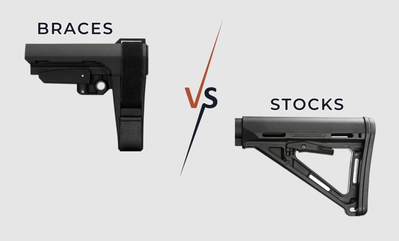
In this very long article we will use an AR style pistol in our explanation. The AR pistol / brace example is simply the most common real-world scenario people are asking about right now, because millions of braced AR pistols exist and the brace-to-stock swap is an obvious, low-effort way to create an SBR. It is not a legal limitation of the injunction itself. Configuring a pistol (of any platform, not limited to AR) that you already own by adding a shoulder stock, thereby creating an SBR (barrel under 16 inches).
This applies to the act of “making” an SBR (or, in varying degrees depending on the specific plaintiff group, certain other categories).
• Taking a rifle you already own and installing a barrel under 16 inches (or otherwise reducing it to SBR dimensions).
• Assembling an SBR configuration from a receiver (or other components) that you already lawfully possess.
If you are not a GOA (Gun Owners of America) member (or other plaintiff member from the injunction’s plaintiffs) but just a citizen of Indiana this information doesn’t apply. So what are you waiting for? Join the GOA today.
We are not lawyers and do not offer legal advice. This article does not constitute or establish a lawyer/client relationship. One should consult with qualified legal representation for advice!
GOA Members in Indiana Can Now Replace an AR Pistol Brace with a Shoulder Stock: Understanding the Landmark Shift in “Making” an SBR Without a Form 1

In the rapidly evolving landscape of federal firearms regulation, a seismic change has taken place that directly benefits Gun Owners of America (GOA) members residing in Indiana. As of mid-August 2026, following the permanent injunction entered by U.S. District Judge James Wesley Hendrix in the Northern District of Texas in the consolidated cases of Silencer Shop Foundation v. ATF (and related Jensen v. ATF), covered individuals—including current members of plaintiff organizations such as GOA—may lawfully reconfigure certain firearms they already own in ways that previously required extensive prior approval under the National Firearms Act (NFA).
One of the most practical and widely discussed applications of this relief involves an AR-platform pistol equipped with a stabilizing brace. A GOA member in Indiana who already possesses such a firearm can now remove the brace and install a conventional shoulder stock, thereby creating a short-barreled rifle (SBR), without first submitting and receiving approval on an ATF Form 1. This is a profound departure from decades of prior practice. At the same time, critical residual requirements remain in force, most notably the statutory obligation to apply proper NFA identification markings to the firearm. Equally important is the clear legal distinction between “making” an SBR from a firearm one already owns and “buying” a pre-built SBR from a Federal Firearms Licensee (FFL). These two pathways are not interchangeable, and the injunction’s protection is narrower with respect to commercial transfers.
This article examines the background of the NFA’s treatment of short-barreled rifles, the constitutional and statutory developments that produced the current injunction, the precise scope of relief available to GOA members in Indiana, the continuing marking obligations, the differences between making and purchasing, practical considerations for Hoosier gun owners, and the broader implications for Second Amendment practice. The discussion is intentionally detailed because the legal terrain remains nuanced, state law continues to matter, and responsible ownership demands precision rather than assumption.
Historical Context: The NFA, Short-Barreled Rifles, and the Brace Era
The National Firearms Act of 1934, as amended, has long regulated certain categories of firearms, including short-barreled rifles. Under 26 U.S.C. § 5845(a), an SBR is defined, in relevant part, as a rifle having a barrel or barrels of less than 16 inches in length, or any weapon made from a rifle if such weapon as modified has an overall length of less than 26 inches or a barrel or barrels of less than 16 inches in length. Possession, making, and transfer of such firearms have historically been conditioned on registration in the National Firearms Registration and Transfer Record, prior application and approval, payment of a making or transfer tax (historically $200), fingerprinting, photographs, and related administrative hurdles.
AR-platform pistols with stabilizing braces occupied a complicated space for years. Early ATF classification letters treated many braces as pistol accessories that did not convert the firearm into an SBR when used as designed. That understanding was upended by the 2023 Final Rule (2021R-08F), which sought to reclassify large numbers of braced pistols as SBRs based on a multi-factor test. Federal courts subsequently vacated that rule, and by 2025–2026 the brace rule itself was no longer being enforced. Braced AR pistols therefore returned, in the main, to non-NFA status so long as they remained configured and used as pistols.
The critical distinction, however, has always been between a brace and a true shoulder stock. Installing a conventional stock designed for shouldering on a pistol with a barrel under 16 inches has long been understood to “make” an SBR. Prior to the recent injunction, that act of making required an approved Form 1 before the stock could be attached. Failure to obtain prior approval constituted a serious federal felony.
The Zero Tax and the Constitutional Challenge
A pivotal legislative change occurred when Congress, through provisions in the One Big Beautiful Bill Act signed in 2025, reduced the making and transfer tax on suppressors, short-barreled rifles, short-barreled shotguns, and certain other NFA items to zero dollars, effective January 1, 2026. The original NFA had been upheld largely as an exercise of Congress’s taxing power. With the tax reduced to zero for these categories, plaintiffs—including the Silencer Shop Foundation, Gun Owners of America, Gun Owners Foundation, and others—challenged the continued enforcement of the registration, application, and related criminal provisions as applied to the now-untaxed items.
On August 5, 2026, Judge Hendrix entered final judgment and a permanent injunction. After a short stay expired, the injunction took effect around August 13, 2026. The court reasoned that once the tax foundation was removed, the regulatory apparatus of prior approval and registration for the affected categories could no longer be sustained under the taxing power, and alternative justifications under the Commerce Clause were insufficient to support the specific challenged provisions against the covered parties. The injunction is party-specific: it protects the named plaintiffs and, importantly, the current and future members of organizational plaintiffs such as GOA, as well as certain customers of commercial plaintiffs in applicable contexts.
Scope of Relief for GOA Members: Making an SBR from an Owned AR Pistol
For a current GOA member in good standing, the practical consequence is significant. If that member already owns an AR pistol (with a barrel under 16 inches) that was lawfully acquired and configured as a pistol—whether with a brace or otherwise—the member may now remove the brace (or bare buffer tube) and install a shoulder stock without first filing a Form 1, waiting for ATF approval, submitting fingerprints and photographs for that purpose, or obtaining a tax stamp. The making, registration, and certain possession provisions of the NFA that would otherwise have been triggered by that reconfiguration are enjoined as against covered persons.
This relief is limited to “making” activity by covered individuals with respect to firearms they already possess. It does not automatically convert every braced pistol in America into a freely convertible SBR, nor does it eliminate all federal firearms law. State law continues to apply independently. Fortunately for Indiana residents, the state imposes no additional prohibition on short-barreled rifles. Indiana treats SBRs as legal provided federal requirements (to the extent still applicable) are satisfied. There is no state-level ban, no extra state registration scheme for NFA items beyond the federal framework, and strong state preemption that limits local interference. Hunting regulations even contemplate the use of short-barreled rifles when properly possessed under federal law. Thus, for example, a GOA member in Sullivan County, Knox County, or elsewhere in Indiana operates in a relatively permissive state environment.
The injunction’s protection is membership-based. Coverage flows through affiliation with a plaintiff organization. Maintaining active GOA membership is therefore not a trivial formality; it is the mechanism that places the individual within the protected class for purposes of the making activity. Individuals who are not members of covered organizations remain subject to the traditional Form 1 process for making an SBR.
NFA Markings Remain Required: What Must Be Engraved
It is essential to emphasize that the absence of a Form 1 requirement does not eliminate all NFA obligations. In particular, the identification and marking requirements of 26 U.S.C. § 5842(a) continue to apply. That statute provides that each manufacturer, importer, and anyone making a firearm shall identify each firearm (other than a destructive device) by a serial number that may not be readily removed, obliterated, or altered, the name of the manufacturer, importer, or maker, and such other identification as the Secretary may by regulations prescribe.
Implementing regulations (including 27 C.F.R. § 479.102 and related provisions under the Gun Control Act marking rules) require that the markings be legible, conspicuous, and applied to a minimum depth of .003 inch, with the serial number in a print size no smaller than 1/16 inch. For a person who is “making” the SBR by reconfiguring an existing firearm, the required information typically includes:
• The maker’s name (the individual’s legal name or the name of a trust or legal entity if the making is done through such an entity);
• The city and state where the making occurred; and
• A unique serial number if the receiver does not already bear one that will serve for the NFA firearm, or continued use of the existing manufacturer’s serial number where appropriate and non-duplicative.
In practice, most AR lower receivers already carry a manufacturer’s serial number. The additional required maker information (name, city, and state of the individual or entity performing the making) must still be engraved, stamped, or otherwise permanently applied, usually on the receiver. Professional laser engraving services commonly handle this work for a modest fee. The markings must be applied in a manner that resists ready removal or alteration.
Attorneys involved in the litigation have been clear: the injunction did not erase the marking duty under § 5842(a). Some related marking and possession-of-unmarked-firearm provisions were enjoined only as to certain plaintiffs in the Jensen side of the consolidated litigation; for GOA members relying on the broader associational coverage, the core maker identification obligation remains. Failure to mark properly leaves the firearm out of compliance even if the Form 1 process itself is enjoined. Responsible owners therefore treat engraving as a non-negotiable step that should occur contemporaneously with or immediately upon the reconfiguration.
“Making” Is Not the Same as “Buying”: The Critical Distinction Between Form 1 and Form 4 Pathways
One of the most important clarifications for gun owners is that the relief for “making” an SBR does not equate to unrestricted commercial acquisition of pre-built SBRs. The two activities are legally distinct and are treated differently under the injunction and under remaining statutes.
“Making” refers to the act of creating or converting a firearm into an NFA-regulated configuration by the individual (or entity) who will possess it. Classic examples include attaching a shoulder stock to an existing AR pistol the owner already possesses, installing a short-barreled upper on a lower the owner already owns, or assembling components into an SBR configuration from a receiver the owner already holds. Under the pre-injunction regime, this required an approved ATF Form 1 (Application to Make and Register a Firearm) before the making occurred. The injunction now bars enforcement of that prior-approval and registration scheme against covered GOA members for the affected categories.
“Buying,” by contrast, refers to the transfer of an already-completed SBR from a licensed dealer (or other transferor) to a non-licensee. Such transfers have historically required an ATF Form 4 (Application for Tax Paid Transfer and Registration of Firearm). Critically, even after the NFA tax was reduced to zero and even after the injunction, a separate provision of the Gun Control Act—18 U.S.C. § 922(b)(4)—continues to prohibit a licensee from selling or delivering a short-barreled rifle or short-barreled shotgun to any person other than another licensee, except as specifically authorized by the Attorney General. In practice, that authorization has been effectuated through the Form 4 process. The injunction removed certain NFA registration and approval requirements but did not itself supply the Attorney General authorization required by the Gun Control Act provision. Consequently, commercial transfers of finished SBRs from FFLs to non-licensees still generally proceed through a Form 4 (or equivalent mechanism if ATF later provides one).
The practical difference is stark. A GOA member in Indiana who already owns an AR pistol can, under the injunction, convert it by installing a stock without a Form 1. That same member cannot simply walk into an FFL, purchase a factory-configured SBR off the shelf, and take it home the same day without the transfer paperwork that § 922(b)(4) continues to require. Some commercial plaintiffs and their customers have additional coverage in specific transactional contexts, but the baseline rule for ordinary retail SBR purchases remains the Form 4 pathway. Palmetto State Armory and certain other entities have issued guidance distinguishing qualifying firearms they previously sold (and GOA membership) from unrelated firearms or component-only purchases; individual circumstances still require careful verification.
This distinction protects the integrity of the commercial dealer system while still delivering meaningful relief to individuals who already possess the base firearm and wish to reconfigure it. It also underscores why membership in a covered organization such as GOA is valuable: it unlocks the making pathway that would otherwise remain closed.
Practical Steps and Considerations for Indiana GOA Members
For a GOA member in Indiana contemplating the conversion of an owned AR pistol, several practical points merit attention. First, confirm current, active membership status. Second, ensure the firearm is already lawfully possessed as a pistol and that state and local law present no independent barrier (Indiana presents none for SBRs). Third, perform the physical reconfiguration only after understanding that the marking obligation attaches upon making. Arrange for professional engraving of the required maker information. Fourth, document the process reasonably—photographs of the firearm before and after, records of membership, and any engraving receipt—without creating unnecessary paper trails beyond what prudence requires. Fifth, recognize that interstate transportation of an SBR continues to implicate separate federal authorization requirements under the NFA and related statutes; the injunction does not automatically eliminate those for travel across state lines. Sixth, remain attentive to the possibility of further appellate developments, although the Trump administration has indicated it will not appeal the core ruling.
Owners should also understand that constructive possession doctrines and the prohibition on assembling an unregistered NFA firearm before approval historically created traps for the unwary. Under the injunction, covered making activity is protected, but careless statements, incomplete markings, or attempts to transfer the newly configured firearm outside lawful channels can still create exposure. Consultation with a knowledgeable firearms attorney familiar with the specific terms of the Hendrix injunction remains the gold standard for high-stakes decisions.
Broader Implications for Second Amendment Practice and Indiana Advocacy
The ability of GOA members to convert owned AR pistols into SBRs without Form 1 approval represents more than a technical adjustment. It is a concrete restoration of the right to configure one’s own property without prior bureaucratic permission for a category of arms that Congress has chosen no longer to tax. Indiana’s already favorable legal climate amplifies the practical benefit. Hoosiers who maintain GOA membership gain a meaningful advantage over non-members in the same state.
At the same time, the persistence of marking requirements and the continued Form 4 pathway for commercial purchases illustrate that the NFA has not been repealed wholesale. Machine guns and destructive devices remain fully regulated with their original tax and registration scheme intact. The injunction is carefully tailored. Responsible advocacy therefore celebrates the victory while accurately describing its boundaries.
For second amendment advocates, the development reinforces the value of organizational membership, the importance of following litigation closely, and the need to educate fellow gun owners about the precise contours of new legal protections. Replacing a brace with a stock is no longer an act that automatically exposes a covered GOA member to Form 1 criminal liability. It is, however, an act that still demands proper identification markings and careful attention to the distinction between self-making and commercial acquisition.
In sum, GOA members in Indiana stand on firmer ground than at any time in recent decades when it comes to reconfiguring an already-owned AR pistol into a short-barreled rifle configuration. The Form 1 barrier for that specific making activity has been enjoined. The markings required by 26 U.S.C. § 5842(a)—serial number integrity, the maker’s name, and the city and state of making, applied to the prescribed depth and size—remain mandatory. And “making” from a firearm one already possesses is legally and practically distinct from purchasing a finished SBR from an FFL, which continues to implicate Gun Control Act transfer restrictions.
This is progress measured in the currency of restored individual autonomy over one’s own property, tempered by the continuing obligations that the statute and the injunction leave in place. Gun owners who understand both the opportunity and the remaining duties will be best positioned to exercise their rights lawfully and effectively. As always, this discussion is informational and not a substitute for personalized legal advice from counsel admitted in the relevant jurisdiction and familiar with the current status of the Silencer Shop Foundation injunction.
Is Membership In The GOA The Only Organization You Can Be Covered By Under the “Hendrix Injunction”?
No, GOA is not the only organization that can provide coverage.
Under the permanent injunction in Silencer Shop Foundation v. ATF (consolidated with Jensen v. ATF), relief for covered “making” of an SBR (including converting a pistol you already own by adding a shoulder stock) extends to current and future members of the associational plaintiffs, as well as customers of certain commercial plaintiffs in qualifying transactions.
Primary Associational Plaintiffs Whose Members Are Covered
Besides Gun Owners of America (GOA), the main membership organizations whose members receive coverage include:
• Gun Owners Foundation (GOF) — Closely affiliated with GOA. It is a named associational plaintiff, and its members are covered on the same basis as GOA members for the enjoined making, registration, and related provisions.
• Firearms Regulatory Accountability Coalition (FRAC) — A named associational plaintiff (industry-focused but with membership coverage). Members of FRAC are within the protected class for the relevant making activities.
From the consolidated Jensen side of the litigation and contemporaneous reporting on the scope of the injunction, additional associational plaintiffs whose members are covered include:
• Texas State Rifle Association (TSRA)
• FPC Action Foundation
• Citizens Committee for the Right to Keep and Bear Arms (CCRKBA)
These groups’ current and future members fall under the injunction’s protection for the challenged NFA provisions as applied to untaxed items such as SBRs.
Important Clarifications for an Indiana Resident
• Indiana is a state plaintiff, but that status primarily protects the state’s own agencies and political subdivisions. It does not automatically cover every Indiana resident as an individual. Individual protection for making an SBR still requires personal coverage through membership in one of the associational plaintiffs (or qualifying customer status in a covered commercial transaction).
• Membership must generally be current/active. Coverage is described as extending to both current and future members of the listed organizations.
• For pure individual “making” (reconfiguring a firearm or receiver you already own), association membership is the cleanest and most commonly discussed route. Commercial plaintiff customer status (e.g., certain transactions involving Silencer Shop, Palmetto State Armory, SilencerCo, B&T USA, or Hot Shots Custom) can provide coverage in specific transactional contexts, but it is more limited for home conversion of an already-owned pistol.
• The injunction remains party-specific. Being a member of other major groups (such as NRA, Second Amendment Foundation, or Firearms Policy Coalition in their general capacity) does not automatically confer the same protection unless that membership runs through one of the specifically covered entities (e.g., CCRKBA or FPC Action Foundation where applicable).
Practical Takeaway
An Indiana resident can obtain the relevant protection by maintaining active membership in GOA, Gun Owners Foundation, FRAC, or one of the other listed associational plaintiffs (TSRA, FPC Action Foundation, or CCRKBA). Many people join more than one for belt-and-suspenders coverage.
Because the exact contours of membership verification and the interplay between the lead case and the consolidated Jensen case continue to be clarified by counsel involved in the litigation, the most reliable approach is to confirm current membership status directly with the organization and, for high-stakes decisions, consult an attorney familiar with the Hendrix injunction. State law in Indiana remains favorable (SBRs are legal), so the federal coverage is the primary variable.